Freitag, 1. Februar 2008

Miyaku. part 2

Yesterday i went to Irabu, just short from Miyaku main island, rented a bike and went around the island and its neighbour island connected by many bridges. More great beaches there, and a pilot training site, whith starts every 10 minutes until noon. I finally jumped into the water at Nakanoshima-beach, the most beautiful, being sheltered by overhanging cliffs. Unfortunaltelly the occasional rainshowers turned into continuing rain accompanied by strong wind, which made me return after being soaked within 10 minutes.


Today it finally cleared up, making the island even more beautiful, once more snorkeling from a deserted beach. Great. Tomorrow i will go on to Ishigaki, departing at 5 in the morning...

Donnerstag, 31. Januar 2008

Miyako-Jima

I got in the plane at Haneda airport, which is built on reclaimed land and reached via Tokyo Monorail. After having checked in my luggage (it's enough to be there 20min in advance) it took 2,5 hours to reach Naha airport on Okinawa, where i was welcomed by rather high temperatures and humidity.

I didnt see much of Naha, because i had to take the ferry the same day, and thanks to a lousy busservice (No destinations on bus-timetables, 20min delay etc) i had to skip Shuri-Castle. Okinawa is a car society as Japanese use to say, and the only american thing for me to experience, as i did only see one westerner during the whole day, so the Americans seem to rather stay on their bases. Ok, there are lots of Steak-Houses though, of course i eat champloo instead , the obviously name-giving dish for the Samurai Champloo anime (both great!!!). From the rather run down Shinko (New Port) in Naha, it takes 8h by ferry to get to Miyako. I slept well and didnt get sick.
At Miyako port i was picked up by the proprietor of the Kuromonchou-Minshuku, who is a totally nice guy, later that day, he showed me around all over Miyako main island from north to south with his car, told me a lot, and in the evening we had dinner together with one of his friends, exchanged sake and home made Schnaps from Austria. Today we did some snorkeling on the eastern coast, the water being warm, but probably not what you need for that kind of activity, so we had enough after 30min. But i am relaxed knowing now there'll be no problem swimming in 20degree warm water (just as air temperature). Only backlash: it is really cloudy and rainy all the time, and you're not able to foretell the next shower (which normally is over again after half an hour something again).
Watch the Fotos!

Sonntag, 27. Januar 2008

Goodbye Tokyo!

Last days in megalopolis! Having left my room with its great view, said good bye to all friends and collegues, i am on my own now once again.

To miss no experience i decided to stay the last night in a capsule hotel in Akihabara, the part of town where all the computer nerds an otaku kids make their shopping dreams come true.

Tomorrow i take the plane down to Naha, Okinawa's main town and from there take the overnight-ferry to Miyako-Jima the same day, an island even farther south, already close to Taiwan. I'll stay there at
Minshuku Kuromonchou, the house having been built around 100 years ago, something really special regarding the past, as okinawa islands where the only part of Japan being conquered by US-troops.

I hope to find calm weather there, it's said to have around 20°C, unfortunately it'll be rather clowdy. nonetheless i hope i can go swimming, as the beaches should be magnificent. Saturday i will go on to Ishigaki, the most southern Part of Japan, before returning to Naha, and from there going north again up to Kagoshima.

Some Akiba-Fotos.

Donnerstag, 24. Januar 2008

Sumo!

As its tournament time now in Tokyo, i finally could witness the best in this traditional style of wrestling. The tournament goes on for two weeks, and takes from early morning until 6pm, when the two Yokozunas (grand champions) have their fights. Of spectators particular interest are of course the major rounds (makuuchi), where the highest ranked compete against each other, from around 4 pm. In fact those guys are not just fat, but incredibly well trained. (Its all muscles, you know...).
As this is thousands of year old practice, it is filled with ritualistic gestures and movements, but those aren't mere decoration. The preparations before the actual fights, with all that throwing of salt, getting in position and then raising again, slapping own bodyparts..., is already a form of engagement. And its possible to estimate who is going to win even before they touched each other. For that it was good to see the minor fights too, because there you see the uncertainties of the contrahents, who don't synchronise that perfectly as do the champions, the later making you think it was only a ceremonial.
Although japanese in tradition, sumo today is rather international, quite a few of the grand wrestlers being of Eastern European origin and the two Yokozunas both being Mongolian.
Watch the clip of one single competition:


And of course there are Fotos as well...

Samstag, 19. Januar 2008

Ekimae

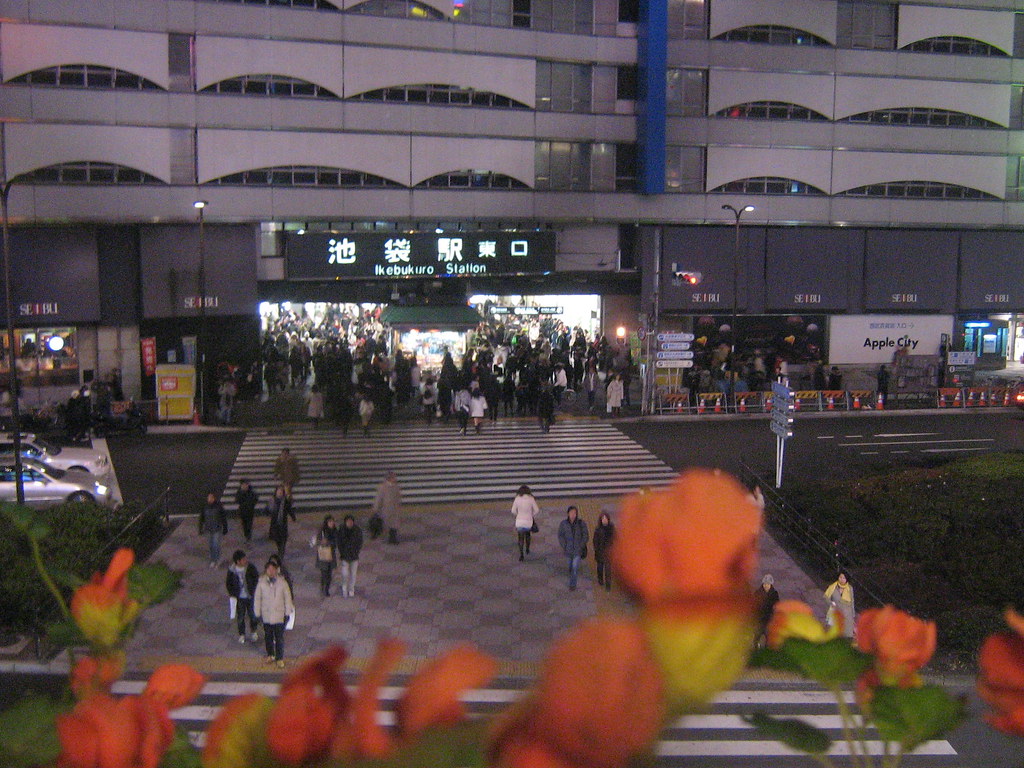
Ekimae means in front of the station. Other than in Europe, where train stations aren't really the place of your choice, in Japan with its public transport society, all revolves around it. So when you tell somebody where you live, you rather say the line and the station where you get off. And of course that's where you meet friends and colleagues or go shopping after work. So the bigger stations (Shinjuku and Ikebukuro being worlds largest) are at once giant department stores, where you can buy what latest fashion trends prescribe, there are floors filled up with restaurants, bars and so on. As the railway companies own the stations, they also usually own the stores (Odakyu in Shinjuku, Seibu in Ikebukuro, again one of Japans largest, and Lumine at major JR-stops).
As it is a meeting point it doesn't stop at the station itself, but the area around those are places to spend free time,
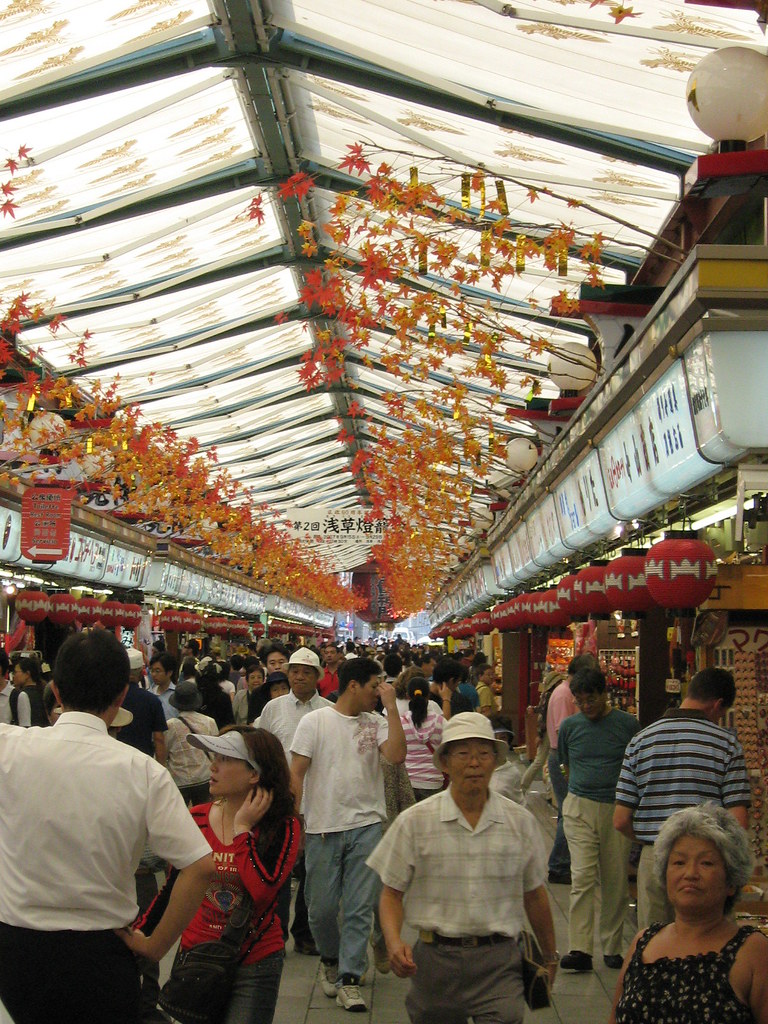
where even more shops, bars, game centers and of course red-light related businesses (Shinjuku's infamous Kabukichou) are nestled along, where neon signs or megaphone using staff crying up their services. So today stations picked up a role, filled out by temples and shrines in former times, this tie still being present in the name of the area around Harajuku station, named Omotesandou, literally meaning front way to a Shrine (in this case the Meiji-Jingu).
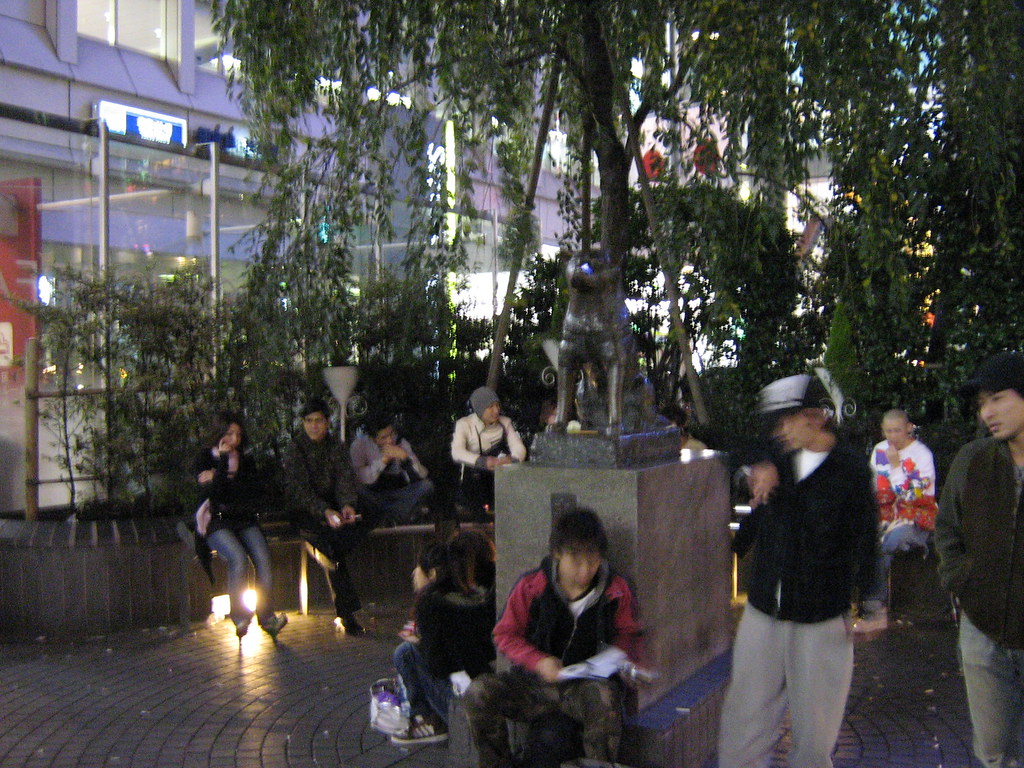
Also, the places you get to know as a tourist, like the above mentioned are those around the station. And European railway companies seem to try to inherit that concept, e.g. the new central station in Berlin, and the efforts (?) made by OEBB, to modernize their buildings.


Fotos

In the evening, there are often music performars of varied talent gathering around the station to promote their art. One particular good one i saw, was Re-Trick in Shinjuku: