Posts mit dem Label Food werden angezeigt. Alle Posts anzeigen

Sonntag, 24. Februar 2008

Spirits

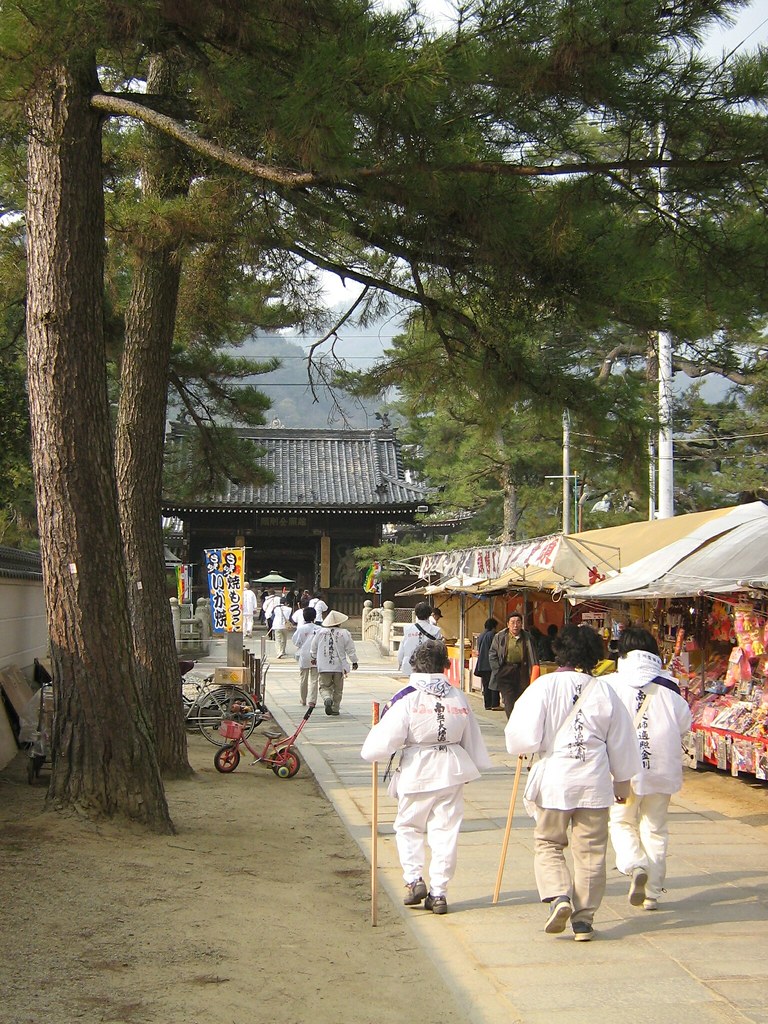
From Matsuyama i went on the 100km something to Saijo. Not only didn't i get a temple stay (probably for henros only), i had to call 5 different hotels until i got a room, they where either "full" or "on holiday" as i was told on the phone. Aoki Hotel right next to the station gave me a room finally. More temples in Saijo, but i only made it to two of them, as i found out about a walkway up to temple number 60, the most remote one around Saijo, promissing escape from the heavy artery traffic.
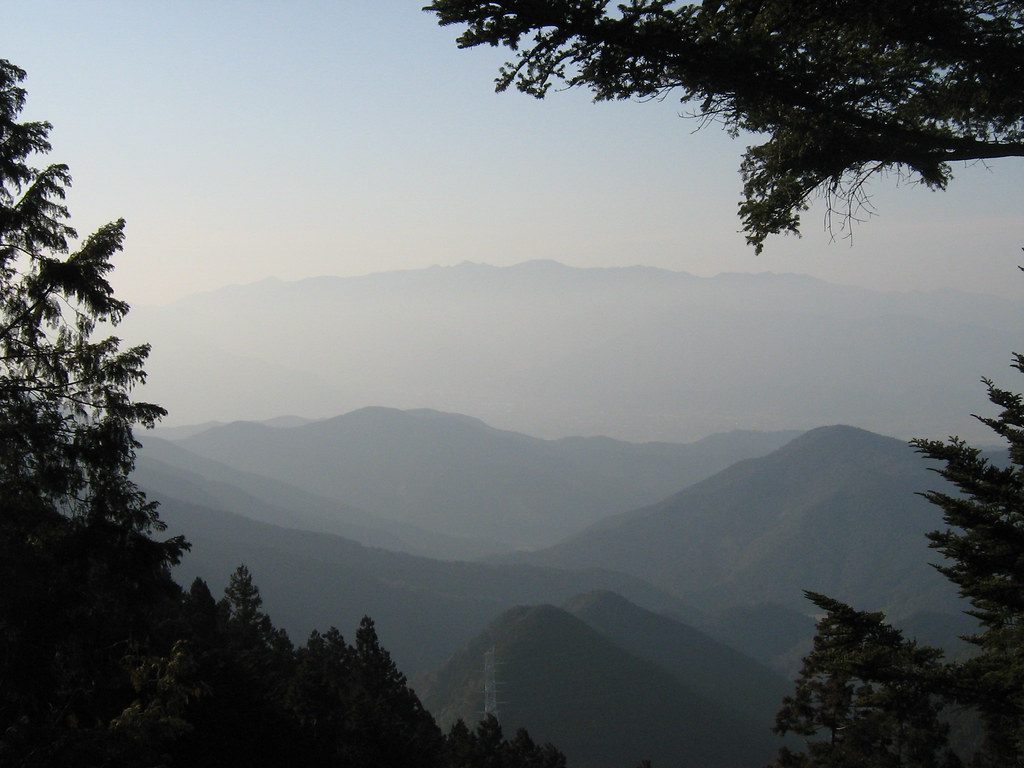
That promise was kept and so i made my path along the chine of Shikoku mountains. You sure know the shape of these from samurai films or similar, it's totally steep at the foot, getting flat once you made that. For me, i was totally exhausted after the first path, moreover i somehow underestimated the distance, so it took me three hours to make it. 900m high there was still much snow, and it was freezing, so no rest for me at the temple, better this way anyway, as i arrived back in the urban sprawl around sunset. So no more temples on that day for me. But Houju-Ji (No. 60) definitely was woth it.

Next day brought enlightment of some different sort, i visited Asahi brewery. Everything was
made up for presentation including an hourly shuttlebus to and from the factory. I got my single person guided toor, from the second floor you look down through windows to the ground level where all the silos, boilers, quality check laboratorys and botteling lines are. The guide explaining in english (read from a sheet), we chatted half english half japanese. This way i learned the stuff i drink taking it for beer so far, actually is happoushuu, with it's share of malt reduced, it slips through taxation levels, making the stuff cheaper (still around 190Y a can). Unfortunately no fotos allowed on the tour.
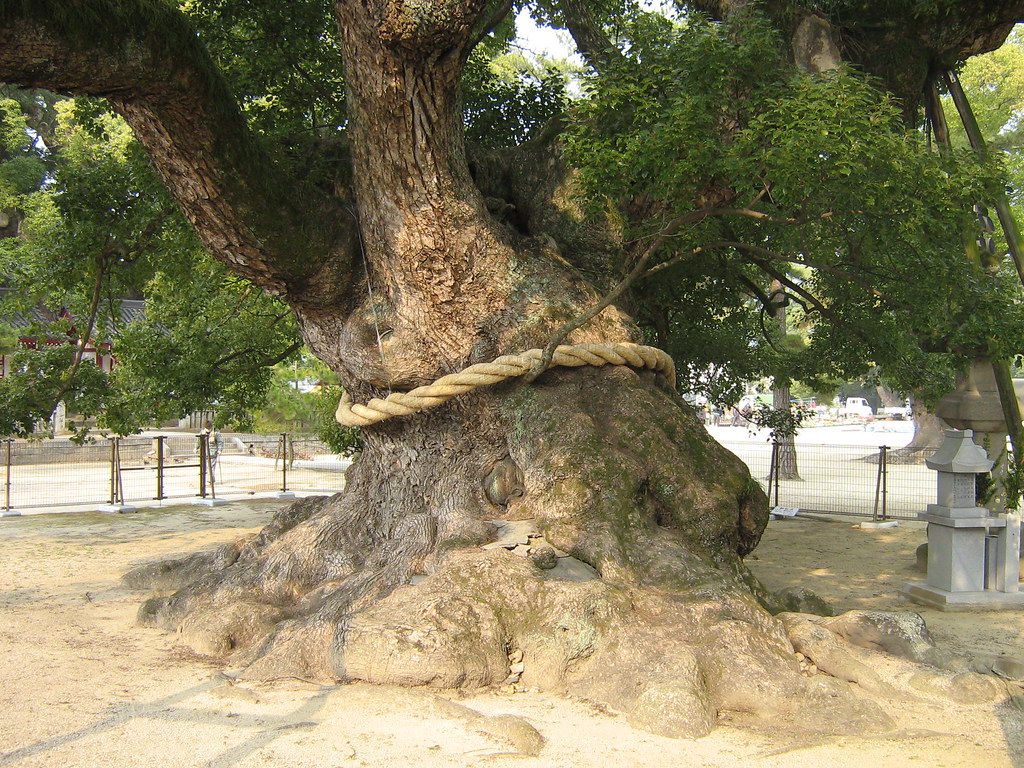

Next day was Zentsuu-ji (Station Hotel, shabby and rather far from the station). I visited temples 72 (Mandara-Ji) to 75 (Zentsuu-Ji), the whole walk was somewhat more relaxed than the day before, only around 5km one way. The latter temple was the place of the boyhood home of Kobo-Daishi, the founder of the pilgrimage.

Next will be Tokushima, my hub over to Osaka, not many plans for there, Naruto has a giant whirlpool.

Saijo & Zentsuu-Ji Fotos

Mittwoch, 16. Januar 2008

Beans and Rice (part 2)!

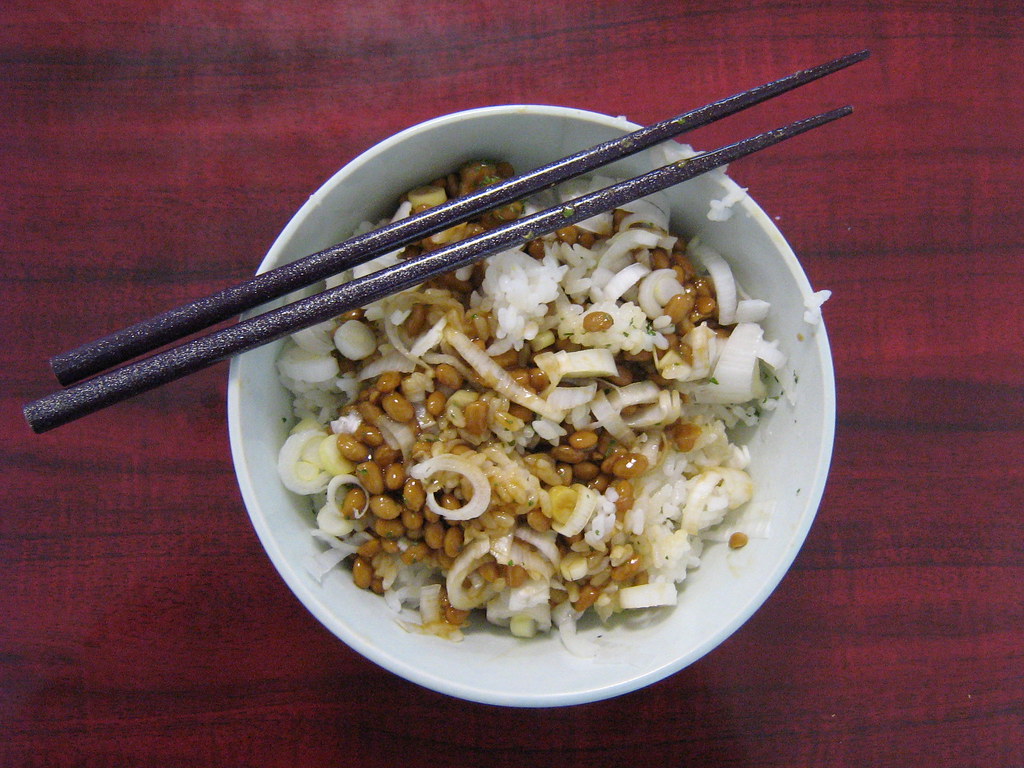
A speciality in Eastern Japanese cuisine is Natto, that is fermented beans, you mix with soy-sauce, mustard and scallions and then pour it over your rice. It is said that foreigners and even kansai people cant eat it. In fact it smells rather funny, and is often compared in its taste to mould cheese, which is somehow fitting and then again not. I tried it sometimes, and could eat it without problems (surprise, surprise), nevertheless its consistence is rather hard to get over, because it is really sticky (“newa newa” as this type of food is called in Japanese) and the look of it is just gross! Despite it is considered uneatable, there seem to be even more smelly foodproducts in this country.

All in all, food is very important here. I first realised that when turning on the tv, and there you have at least 2-3 channels, where there is some food related show. This doesnt stop with all the dull cooking shows, i know back from home, but includes presentations of the current seasons specialities, or those of the different regions, or from all over the world (This years rice, hokkaido clambs, beaujolais nouveau). The very unusual about it, you can watch people eating the most diverse things on screen and yelling “oishii” or “umai” to confirm its tastiness, which can also go wrong from time to time (like with one show, where the showmaster had to taste dishes prepared by fans of the show and just couldnt keep up his face...).

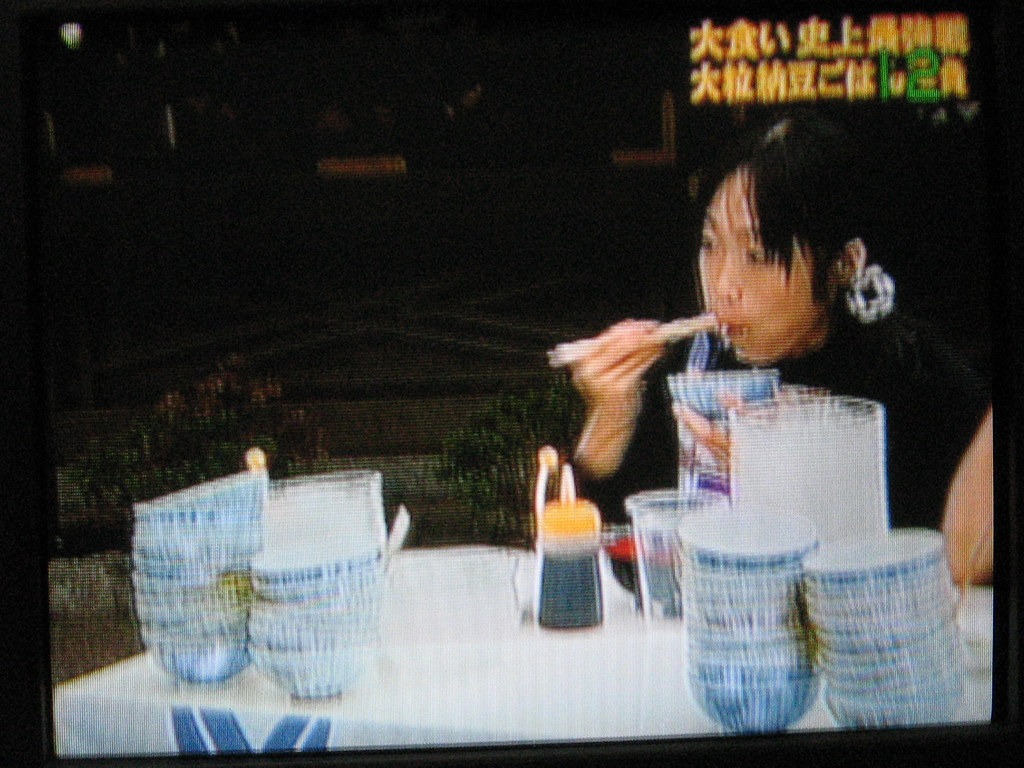
And of course there are eating contests, its contestants having some sort of celebrity status.
But this goes right into daily life. After having been dared by my iaido sensei with strange types of sushi, like wasashi (raw horsemeat), yuke (sliced raw beef topped with a small raw egg) and last but not least the infamous shirako (sperm filled fish testicles), which i had to eat while being oservated by him as well as the shopkeeper, i could proudly yell “oishii” at the next occasion, whereas the members of the dojo really had a hard time swallowing!

Food related Fotos.
Couple who just had to carry the natto-experience to excess.


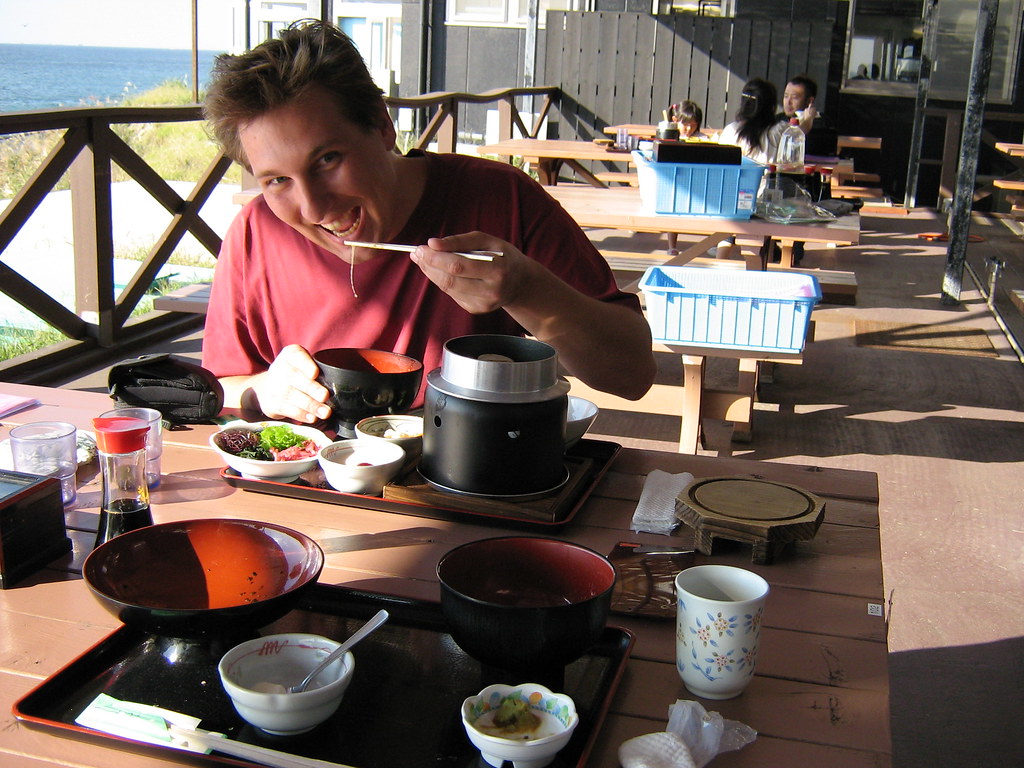
Another newanewa dish: Me eating Sticky Seaweed soup at Nokogiriyama

Freitag, 11. Januar 2008

Tonoyaki at Torigoe-Jinja

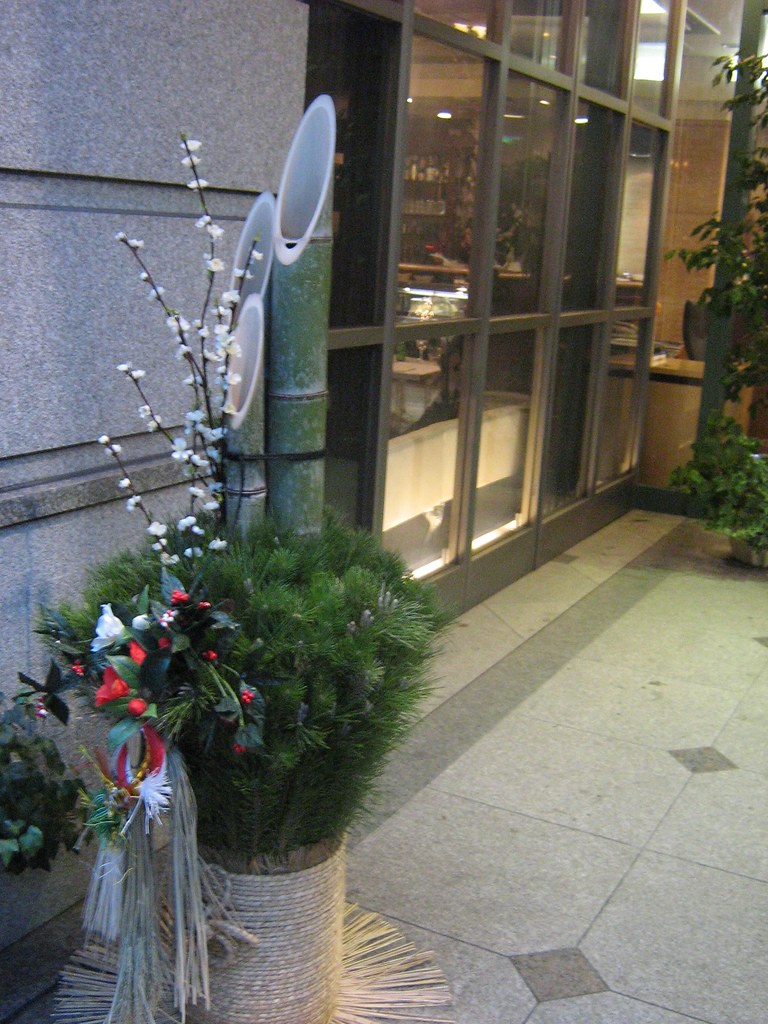
Somewhat awkward title, i know, but thats how its called. Shops and restaurants all reopened again, but The New Year period lasting for quite some days here in Japan and are followed by various typical acitivites. One i visited is the said Tonoyaki, where New Year decorations are burnt. Additionaly, people hold Omochi into the fire, using long bamboo sticks. Both of it is considered bringing good luck, for the new Year. This custom used to be a rather widespread one, but in Tokyo now it only survived at Torigoe-Jinja.

Omochi is typically eat for new year, it is a small cake made of - Yes! - rice. You hold it into the fire until its starting to turn black. Then you can eat it. I got my own stick, and roasted my own one. The taste was funny!


A more relaxed way of roasting your Omochi
The Dark side of Omochi

Video

Freitag, 14. Dezember 2007

Trade

As it seems to be the appropriate time to talk about consumption, I continue with two major trading spots in Tokyo.

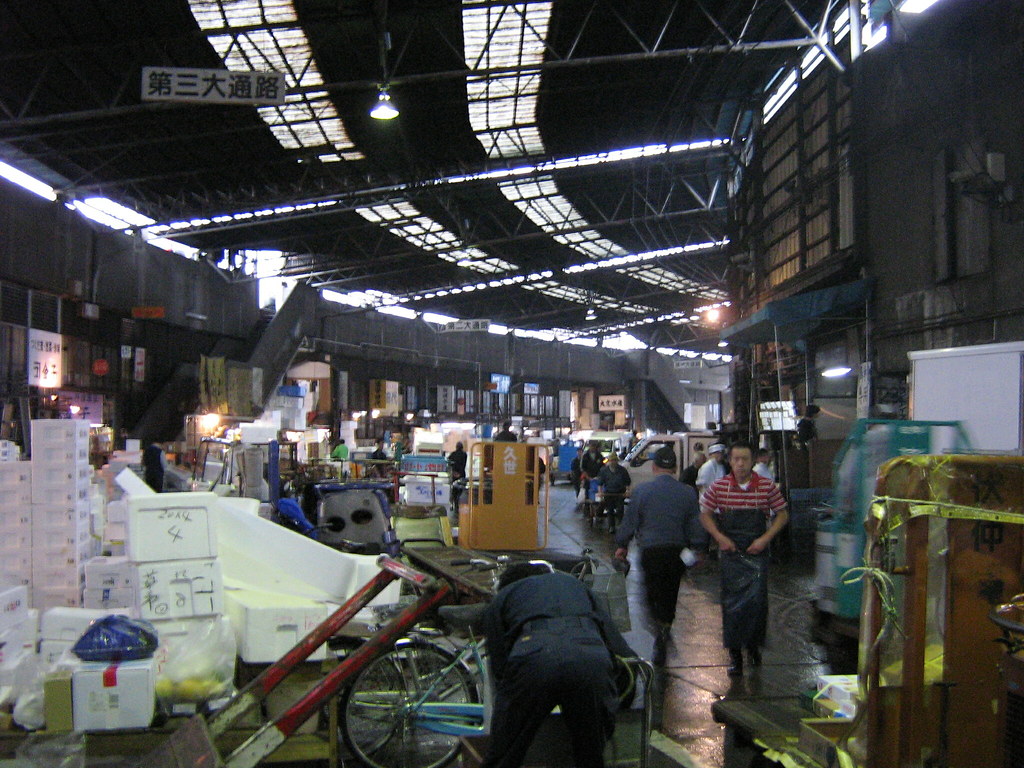
Tsukiji Market Japans largest one and also one of worlds largest wholesalemarkets. But the main thing of interest there is fish. Auctions taking place there in early morning, and you can watch all steps of fish being processed. Away from the hectic tuna auctions the goods being delivered to merchants, who saw the big animals and sale pieces of several kilos weight, which move on to the sushi-stores, were they once again are sliced up into much more tinier pieces, fitting on a small rice ball now. Besides fish you can get anything which used to be living in the sea. Especially in the morning it gets very hectic and you really have to be careful about all the small pick-up-carts entering even narrowest galleries, its already difficult to pass on foot without stumbling over anything. We ended our visit with a plate of freshest sushi possible. It was delicious, but as it was early morning and also some special titbits topping the rice, it turned out to be a particular challenge. And again it was early morning!

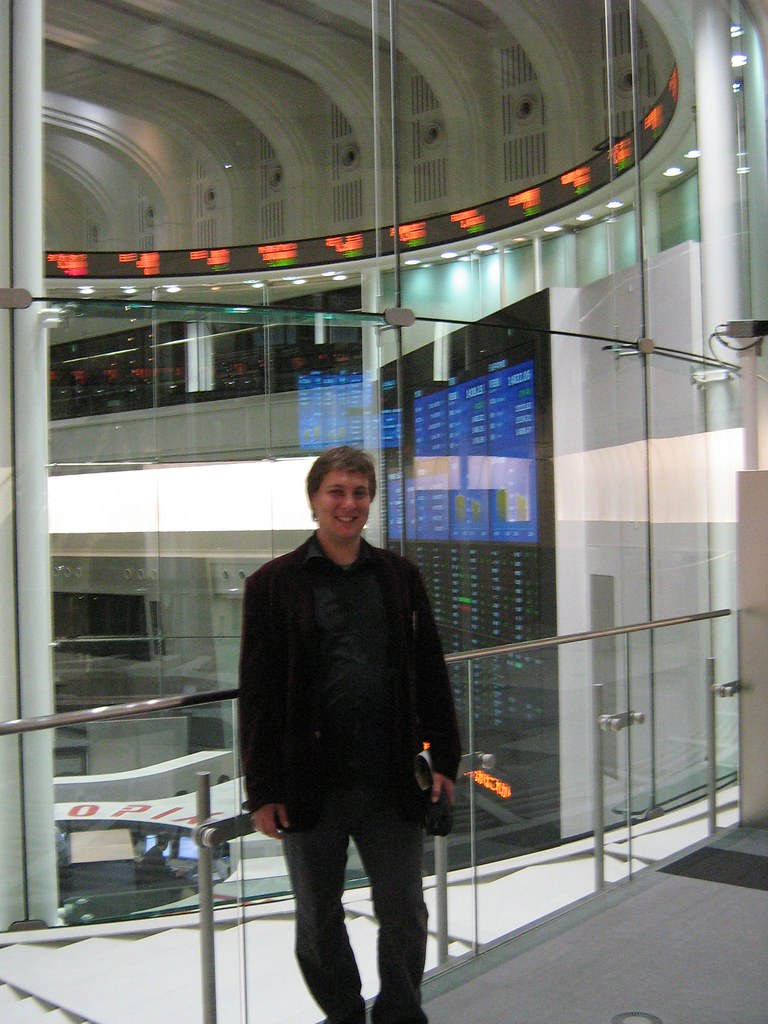
The other one is Tokyo Stock Exchange. Again one of worlds largest as probably anyone knows. But no hectic there, as floor trade has been put down and anything is computerized now. Instead of closing everything down for public too, as the paranoiacs did in New York and Chicago, they put up a giant screen where the quotes of all major listed companies are displayed. Nowadays there are only some system maintenants working there along with agents from finance news corporations. The giantesque arrangement seemed to be rather useless, but it reminded me of those science fiction movies as well as the funny Go for it (“Zwei bärenstarke Typen”). As this place is not among major tourist spots i had my guided tour together with only one guy from the Netherlands being into commodities trading.
Very interesting tour!

All fotos on Trade!

Sonntag, 9. Dezember 2007

Melons for 60Euros each – Costs in Japan

I went to Japan somehow anxious about the high prices, i have heard of. Tokyo is said to have been worlds most espensive city up to 2005 now being the second to next.
But as soon as i got here I got more relaxed. Thanks to a strong Euro together with a weak Yen (different interest rates along with a weak dollar the Yen is tied to) the widespread horror stories are definitely outdated today (for Europeans at least...)

In fact there are some things that are really expensive here, especially in Tokyo:
  1. Housing (this applies definitely to Tokyo, this is also why so many people taking daily rides of 1h and more).
  2. Riding the Shinkansen (Taking the local trains or rapid ones is cheap, but as you have to get along with distances quite often, so you will want to get on a limited express or the said Shinkansen and a seat reservation there doubles resp. tripples the price).
  3. Fruits and vegetables: The melons are still expensive, and a single apple costs around laughable 1,5 Euros. But it is possible to get around that somehow. Tangerines (what a stupid word for Mandarinen!) and Banans are ok. Replace lettuce with soy sprouts and it is ok too.
But just like the mentioned points above, the real costs are not about about what you need, but what you can get.
This city is defintely a shopping mekka! I always wondered about all the people relating Tokyo to shopping (and consumption in a more general speaking). The point is there is an endless variety of stuff. You can get the cheapest (all the 100Yen shops), you can get the most luxuriest (Ginza), as well as the most kinky (Akihabara, Harajuku) and of course all the traditional (Asakusa) stuff. And you get what you have paid for practically all the time.
Myself surely being far away from a shopping junkie, the more i see, the more difficult for me it gets to set back. Never experienced such a situation in all my life so far...!
Fitting topic for Christmas approaching
somehow...

Samstag, 1. Dezember 2007

Hakone – Fujispotting and Leaves Hunt

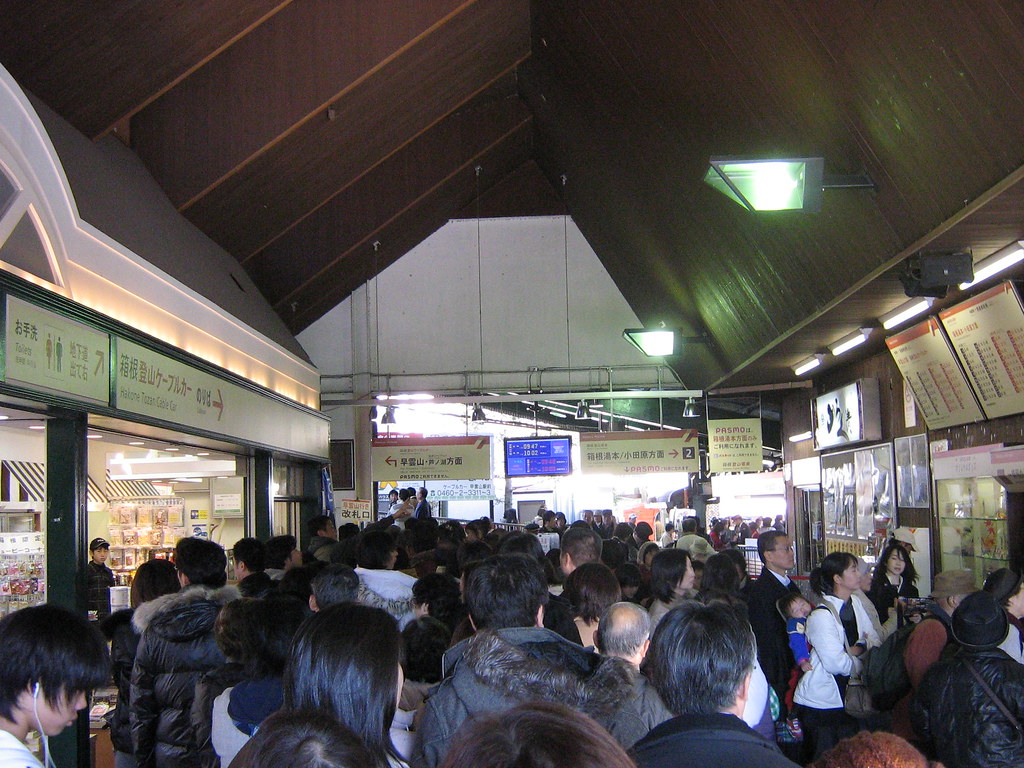
After several weeks in central Tokyo it was definitely time for me to get out and experience some nature. So i took the Romancecar last Sunday and went over to Hakone, just at the border of the Kanto plain. As it was the right time, weather was promising and it was the last day of a long weekend, this japanese tourism hotspot par excellence was crowded just like back at Shinjuku station where I started my trip.
At Hakone Yumoto, I had to change for the Tozan small railway up to Gora, a way which is said to be scenic,
but as it was just like metro at rushhour i couldnt get much of the scenery.

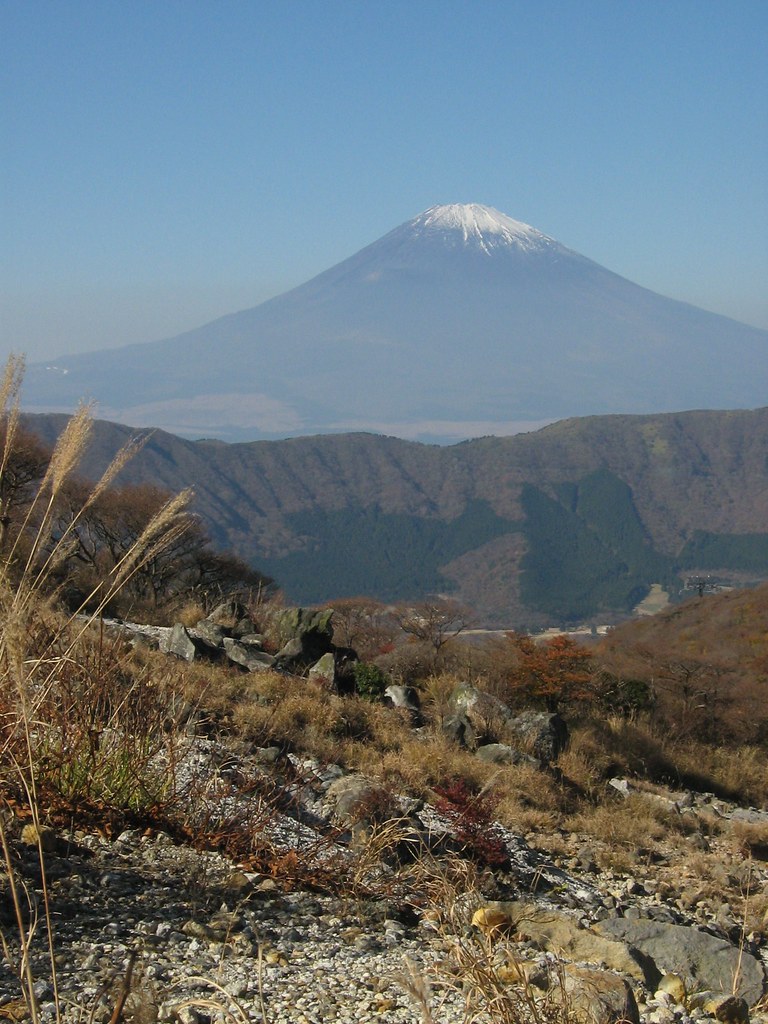
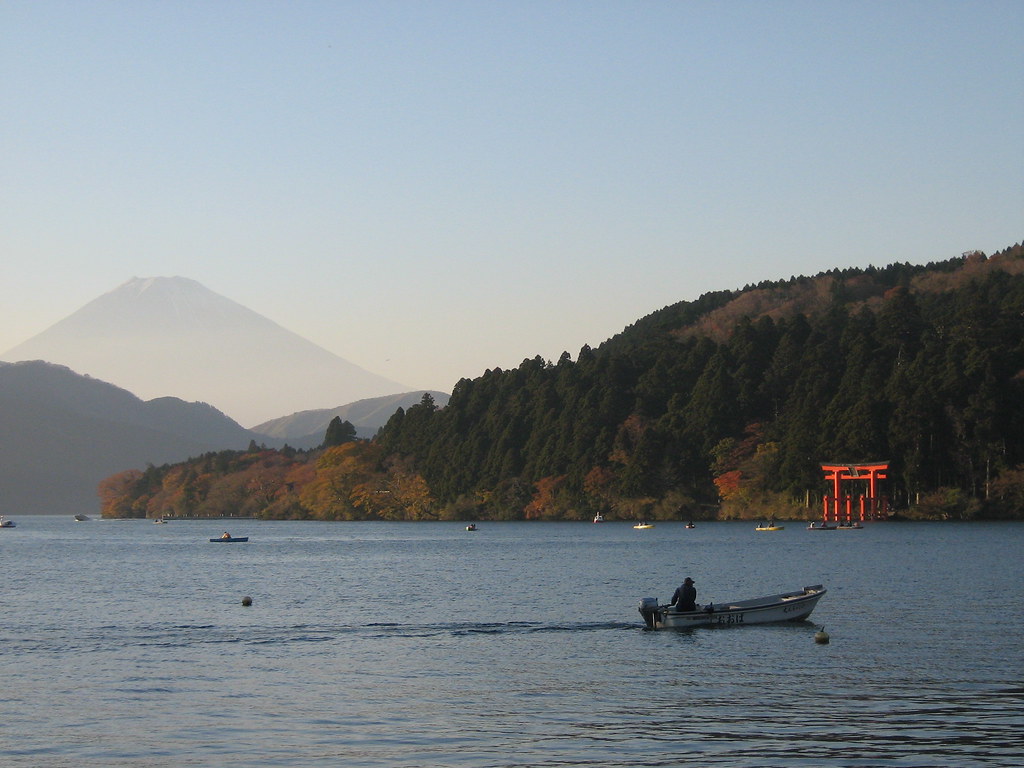
Up there, i had to change two more times, first for the Tozan Cable Car, then for the Hakone Ropeway. Just a fine variety of means of transportation i had there! When the Ropeway made it over the final ridge up to Owakudani, the reason why this spot attracted hordes of visitors became evident as the Fuji was raising in front of a bright autumn sky!
What an impressive view!


But Owakudani is an attraction by itself, as the mountain crest is covered with sulphuric hotsprings and steam fuming out of the rugged ground. Unfortunately the nature-trail leading right through the moonlike landscape was closed down by the time, so i had to content myself watching it from some distance. Furthermore Owakudani also has its culinary speciality, that is black eggs, which are boiled in pools of the said hotsprings, giving them a dark colour thanks to a chemical reaction.

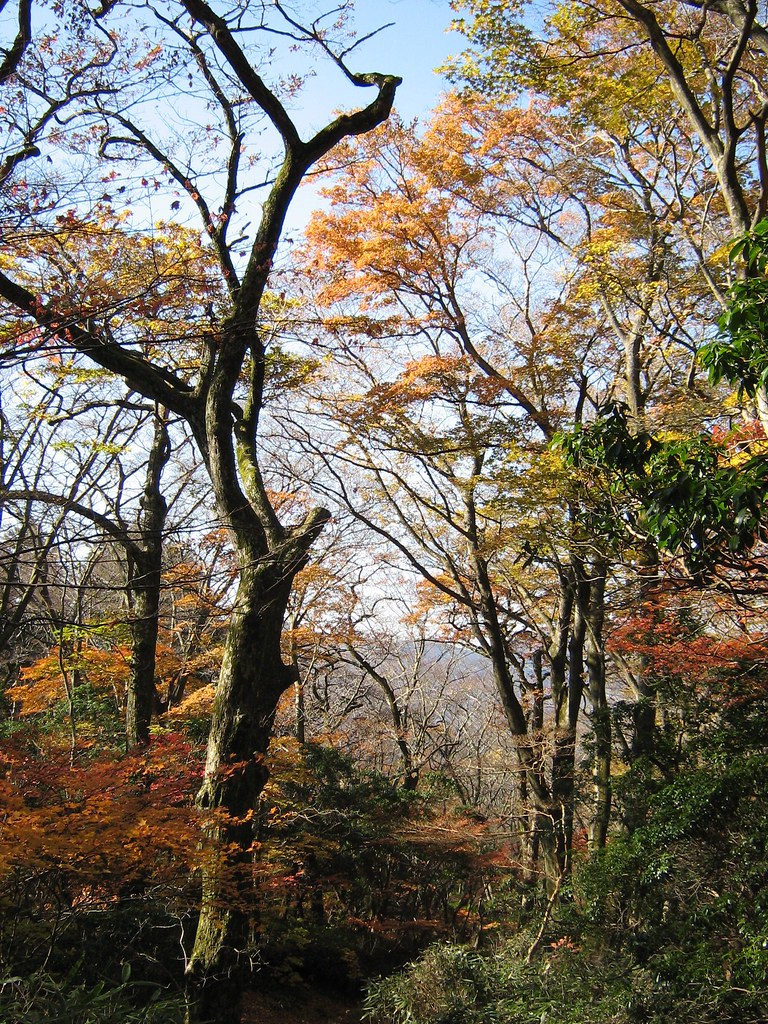
By then i definitely had to escape from the crowds and make my way down to lake Ashi along a hiking trail, leading through a forest in full autumnal decoration. It is momijigari season, the time Japanese are hunting for turned red leaves and its considered to be just the autumn equivalent of cherry blossom, well covered in weather reports. And in fact, besides the famous radiant red you have all kinds of different colours.
After stopping at a temple and a tea house, both well hidden in the forest i got to the lakeshore of Togendai from where i took the megakitschy pirateboat ferry down to Hakone-machi, which is once again offering great views of the Fuji. Down there is the reconstruction of Edo-period Hakone Checkpoint, one of many posts serving to collect taxes on goods arriving form outside Edo as well keeping the few female inhabitants of the city inside (and therefore the daimyos loyal?). From there I walked over to Moto Hakone with its famous Shrine.

That's where I decided, to stay overnight as i definitely wanted to hike a little bit more and soak in an onsen without being worried about getting the last connection back home. So I stayed at Moto Hakone Guesthouse (Just a walk form the lakeshore up to Ashinokomae bus station, (0460-3-7880), where i got a small but cosy room for the night.
After having spent the evening at the great Mori no Yu
, I got up early the next day and made my way back to Yumoto along the Stone Paved Edo Time Highway, going down from the vulcanic heights along a scenic valley. Back at Yumoto i dipped once more into an onsen pool at the rustic Kappa Tengoku, before finally returning to Tokyo.

All Hakone fotos!

In the ropeway up to Owakudani

Montag, 5. November 2007

Food

The Japanese word for meal is “Gohan” literally meaning boiled rice.
And boiled rice is just what you get all day long. Boiled rice in the morning ("asa-gohan"), boiled rice at noon ("hiro-gohan") and yes! boiled rice in the evening ("ban-gohan").
But that doesn't at all mean it is bad! It's the opposite! Rice is just the best thing to get you fed. And if it might sound strange to have rice accompanying spaghetti with sauce, it just does what it has to do. And you'll never experience that strange feeling of not being satisfied after having eat.

In fact, back then at Hachigome (Dewa-Sanzan), as season was low, all i got for dinner were two small pieces of onigiri (rice-sandwich, left). Normally these are filled with fish or something alike. But those only contained a single sour cherry. And I really worried, how I would make it through the evening only having eat those two tiny pieces.
But it lasted. And not a second I wasted a thought on getting more somehow.

Of course there is much much more than that, and especially in Tokyo you can get everything! One popular all days long food is noodle soup (“ramen”, “udon”, “soba”), you can find it just everywhere in this country! But it doesn't need to be a traditional dish. In the supermarket you can get yummie things too, like a soba-sandwich....

Dienstag, 2. Oktober 2007

From Aizu to Tsuruoka

The same day I went to Tsuruoka, which i read was the best stay on my way to Dewa Sanzan, the three sacred mountains: Haguro-San, Gas-San and Yudono-San, each holding a Shinto-Shrine.
I reserved a room at Nara Ryokan in Tsuruoka (down the main street away from the station, tel. 0235-22-1202) with simple tatami beds and western style bathrooms and a very kind landlady.
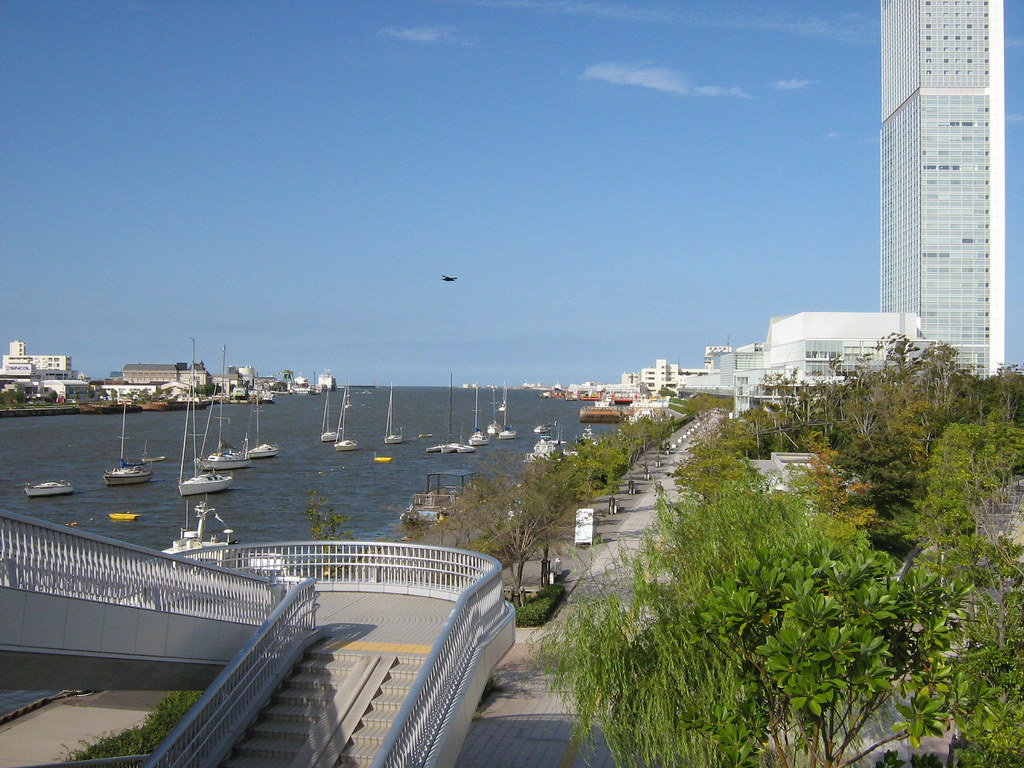
To get there i had to change trains at Niigata a middle sized town at the japanese sea.Having stayed on Honshu for some days now, i hoped to get to the seaside and taste some fresh fish. Unfortunately, i didnt come farther than to Shianano river delta, when it became already time to return and not miss my train.Still thinking the european way, i thought, where there is a nice view and good atmosphere, there must be some restaurant or at least a tea- or coffehouse. But the only thing that caught my eye was a big convention center. There, i said to myself, there i must get something to eat.
In vain.

Actually there where some buisiness folks sitting around tables on a beautiful terrace, but what they were drinking from, were oneway bottles and they had brought their bento with them.
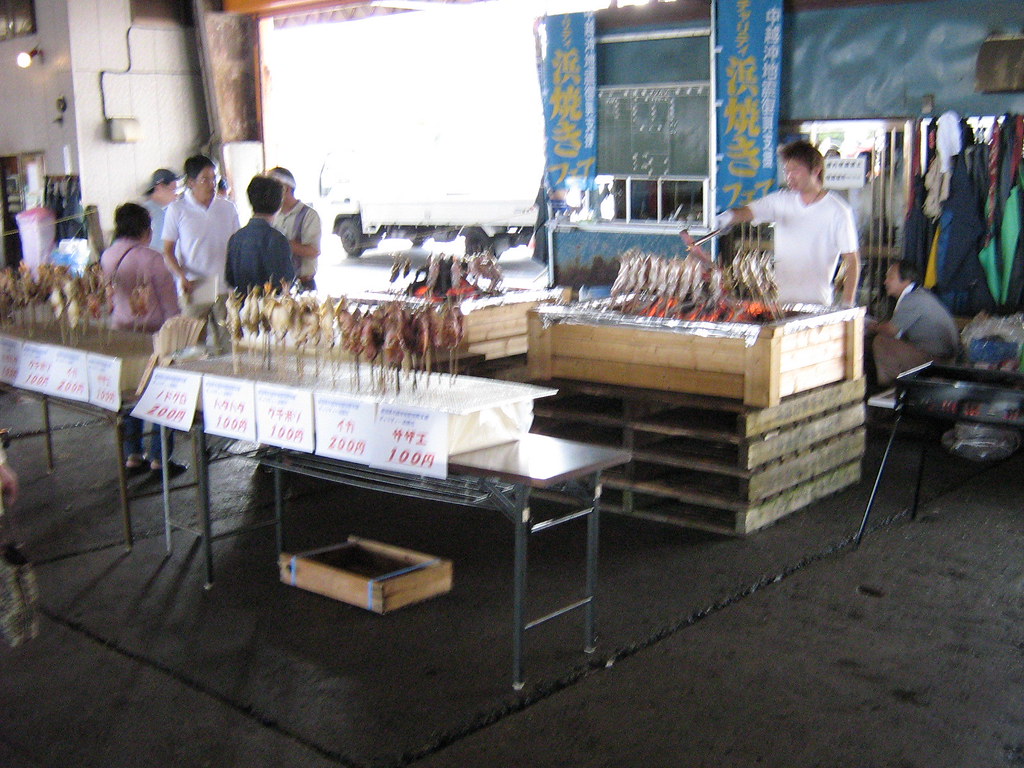
Quite disappointed i went back out the the roadside, passing by a big storage hall.And thats where i noticed some flags with the character for fish. So just out of curiosity i stumbled into the open hall, where my eyes instantly got caught by the view of a large grill and tasty seafood roasting over burning wood. But they would only sell it starting from four o'clock, when i would be already continuing for Tsuruoka.

Now having the delicious goods right under my nose, i simply couldnt turn around and go away. So i told them my situation and begged them to make an excemption. They did. And luckily I carried my catch back to the Shinano where I had my lunch, just the way i had hoped it to be.