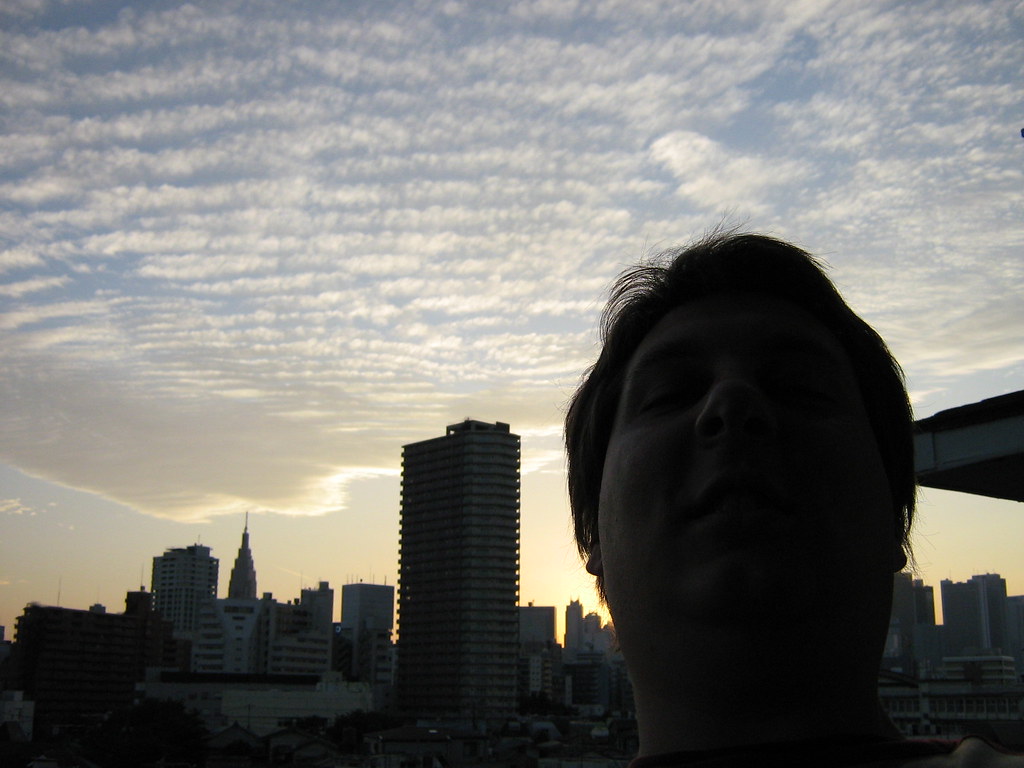
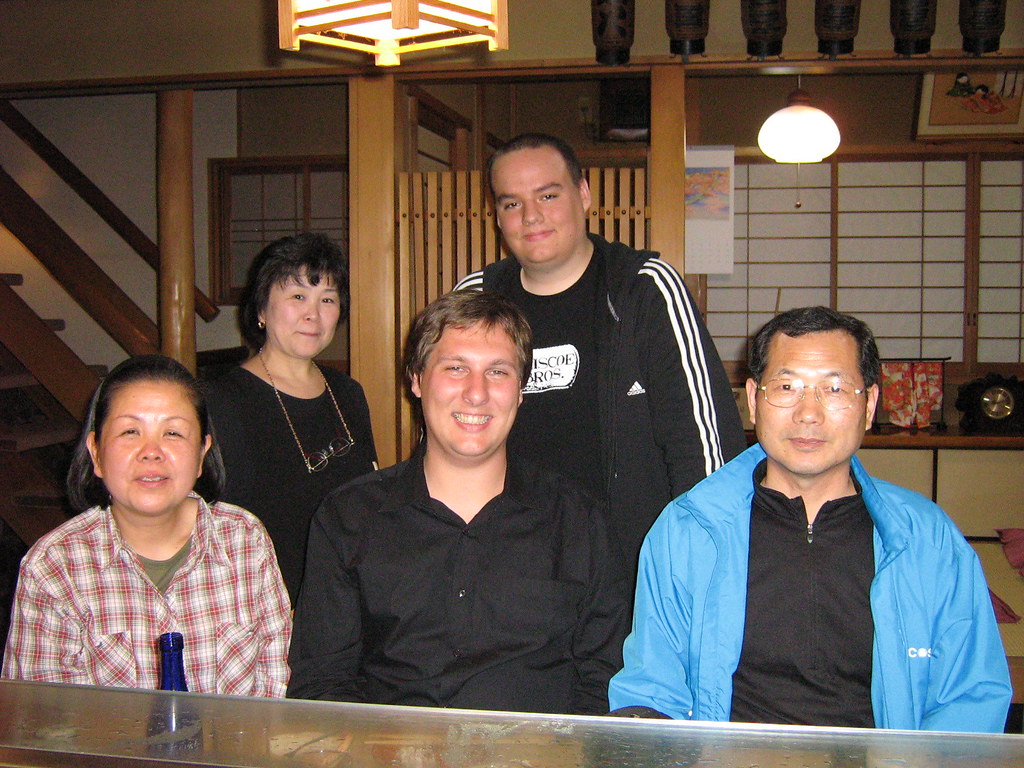
Where there are volcanos, hotsprings never are far, as i waited for the rocket launch day, i went south to Ibusuki, famous for its sandbath on the beach, you lie into the warm sand and are buried up to the neck, it can get really hot, but its just so relaxing. Only the constant sound of digging shovels is somewhat scary, reminded me of a burial ground. Anyway the salty thermal water is everywhere, steam from the beach, steam from the canals along the road and even the bath at the youthostel i stayed at, had it's own onsen.
As bathing is best after a long hard day, not that i needed a pretext, i went further south to the symetric cone of extinct Kaimon-dake. It takes 2 hours along a narrow path winding up around the mountain. The last kilometer contained some climbing and ladders, but i really enjoed the first serious hike, since my passage over Gas-San last september. On the top, 900 meter above the close seas level, i had a stunning 360° view, wow!
As today was the assigned day for a rocket launch, i hopped on the jetfoil (a calm ride, despite the rough sea) down to Tanegashima, where rifles were introduced to japan, to watch the launch. Unfortunately it was cancelled, so i had to content myself with a visit of the spacecenter, together with the launch facilities situated in front of a great beach scenery. Tanegashima Fotos
I will stay in Tanegshima business in tonight, and would like to even longer, as the island is very nice, but as it's definitely time to get farther up north, it'll be the jetfoil once more, and i wont be able to avoid the shinkansen on my way to Aso-san, despite my intention to use no more rapid transport once in Okinawa...
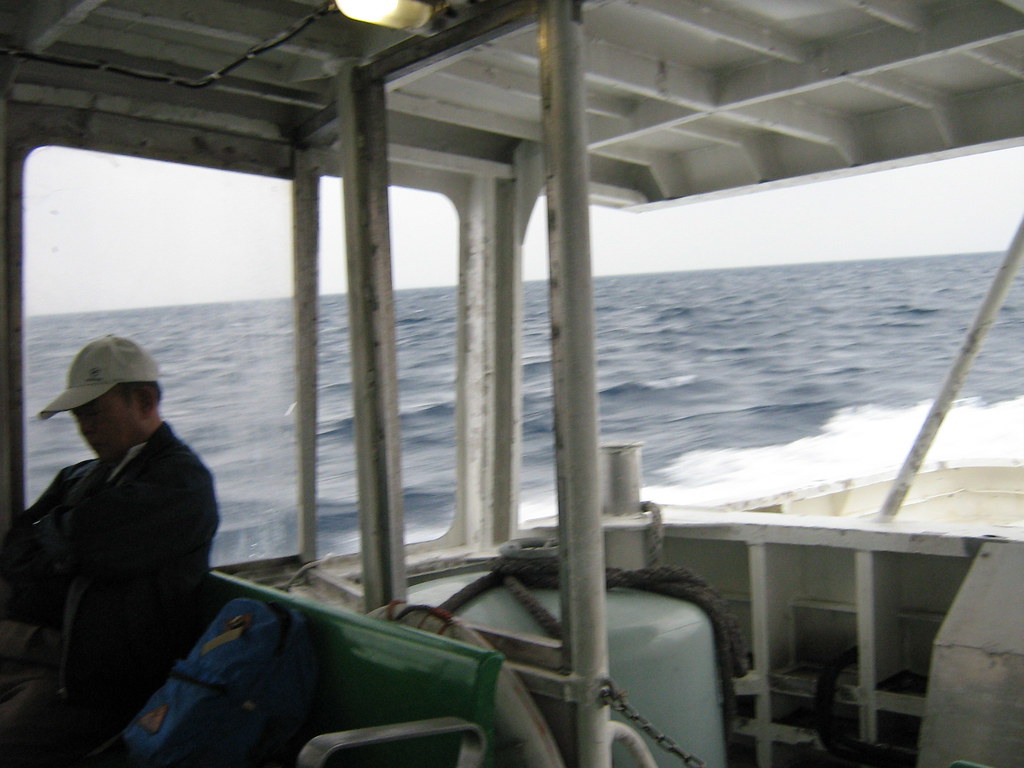
Once again a ferry ride and once more strong waves conveyed by wind from the north. I hoped to get some sleep during the journey, so i layed down at once after boarding at 6. Although luying flat on the matrass, i completly lost balance, only this time this was no alcohol induced waggeling, but rather the some 100m long vessel itself, lifted by the rough sea, giving me moments of levitation, then hitting the water surface again, So i opted for a rattan armchair in a windowed corridor (thanks for the hint dad), to spend my wake there.Going by ferry is not so popular anymore, as regular flights link even the remotest Okinawan islands with the rest of Japan and its not much more expensive taking the plane if you book early. Therefore one line going to the southern islands stopped passenger transport at all.
The ships of Arimura Line are part Cargo part passenger ferries (very common on all islands) and there is only one ferry a week back to Naha. There are several classes, the first, the regular one, with cabins for 6 people and a 2nd class-type with bunk beds equipped dorms, no sign of tatami dorms i read about on the internet. Although going by ferry might not be the most convenient way of travelling anymore, as it takes 14h from Ishigaki to Naha (around 450km) it's a good way to experience the distance between the islands and let you feel that you're actually in the middle of the sea, a fact the japanese seem to try to make you forget.
Despite an island country there is not much sense for the sea here (except fishing). In Honshu you'll never see anything of the sea, if you not really go for it and Tokyo is even worse in that regard (artificial Odaiba doesn't count!). On the other hand this isn't really surprising regarding the countries self chosen isolation, where it was forbidden to leave the country for several hundreds of years, neither were tall ships allowed to be build. So even today, the ocean seems to rather mark a definite border than something accessible.
As promised, an update on the ranking, and a new number one rank at once! 1) Yaeyaman senior dozing off on the outer deck of the noisy shaking splashy speedboat to Ohara (see below). 2) Man dozing off while unfolding a peace of paper. 3) Woman sleeping while on an escalator. 4) Girl satnding sleeps while holding herself up on a grab handle. 5) Girl fallen asleep while typing a message.
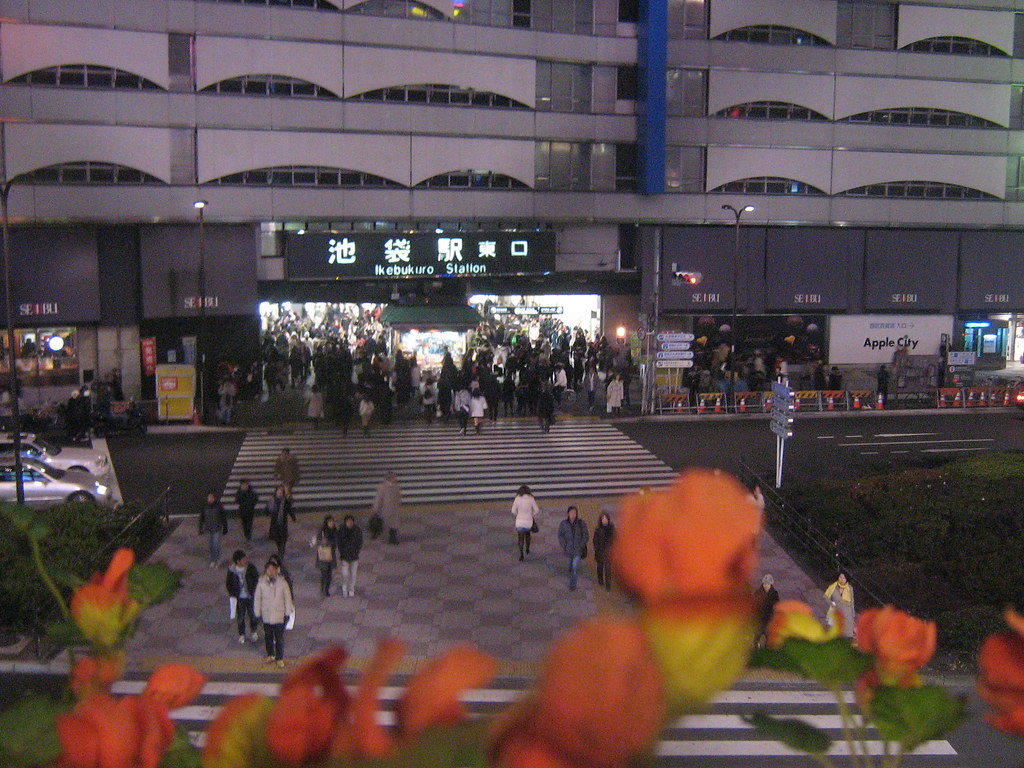
Ekimae means in front of the station. Other than in Europe, where train stations aren't really the place of your choice, in Japan with its public transport society, all revolves around it. So when you tell somebody where you live, you rather say the line and the station where you get off. And of course that's where you meet friends and colleagues or go shopping after work. So the bigger stations (Shinjuku and Ikebukuro being worlds largest) are at once giant department stores, where you can buy what latest fashion trends prescribe, there are floors filled up with restaurants, bars and so on. As the railway companies own the stations, they also usually own the stores (Odakyu in Shinjuku, Seibu in Ikebukuro, again one of Japans largest, and Lumine at major JR-stops).
As it is a meeting point it doesn't stop at the station itself, but the area around those are places to spend free time, where even more shops, bars, game centers and of course red-light related businesses (Shinjuku's infamous Kabukichou) are nestled along, where neon signs or megaphone using staff crying up their services. So today stations picked up a role, filled out by temples and shrines in former times, this tie still being present in the name of the area around Harajuku station, named Omotesandou, literally meaning front way to a Shrine (in this case the Meiji-Jingu).
Also, the places you get to know as a tourist, like the above mentioned are those around the station. And European railway companies seem to try to inherit that concept, e.g. the new central station in Berlin, and the efforts (?) made by OEBB, to modernize their buildings.
In the evening, there are often music performars of varied talent gathering around the station to promote their art. One particular good one i saw, was Re-Trick in Shinjuku:
I went to Japan somehow anxious about the high prices, i have heard of. Tokyo is said to have been worlds most espensive city up to 2005 now being the second to next. But as soon as i got here I got more relaxed. Thanks to a strong Euro together with a weak Yen (different interest rates along with a weak dollar the Yen is tied to) the widespread horror stories are definitely outdated today (for Europeans at least...)
In fact there are some things that are really expensive here, especially in Tokyo:
Housing (this applies definitely to Tokyo, this is also why so many people taking daily rides of 1h and more).
Riding the Shinkansen (Taking the local trains or rapid ones is cheap, but as you have to get along with distances quite often, so you will want to get on a limited express or the said Shinkansen and a seat reservation there doubles resp. tripples the price).
Fruits and vegetables: The melons are still expensive, and a single apple costs around laughable 1,5 Euros. But it is possible to get around that somehow. Tangerines (what a stupid word for Mandarinen!) and Banans are ok. Replace lettuce with soy sprouts and it is ok too.
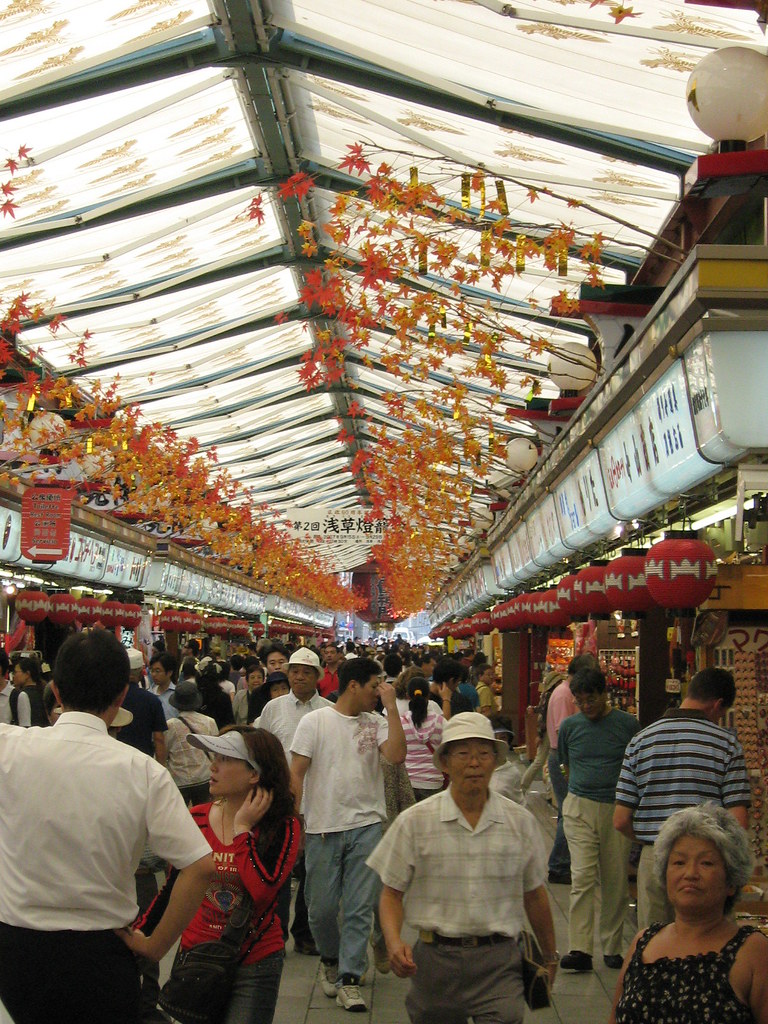
But just like the mentioned points above, the real costs are not about about what you need, but what you can get. This city is defintely a shopping mekka! I always wondered about all the people relating Tokyo to shopping (and consumption in a more general speaking). The point is there is an endless variety of stuff. You can get the cheapest (all the 100Yen shops), you can get the most luxuriest (Ginza), as well as the most kinky (Akihabara, Harajuku) and of course all the traditional (Asakusa) stuff. And you get what you have paid for practically all the time. Myself surely being far away from a shopping junkie, the more i see, the more difficult for me it gets to set back. Never experienced such a situation in all my life so far...! Fitting topic for Christmas approaching somehow...
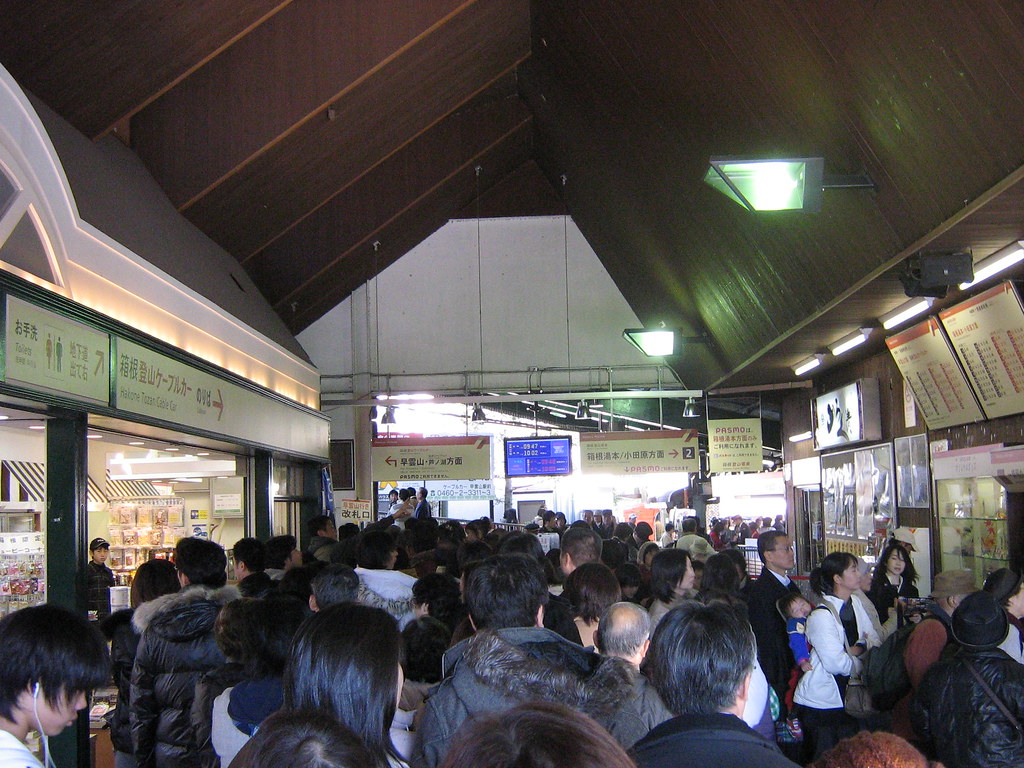
After several weeks in central Tokyo it was definitely time for me to get out and experience some nature. So i took the Romancecar last Sunday and went over to Hakone, just at the border of the Kanto plain. As it was the right time, weather was promising and it was the last day of a long weekend, this japanese tourism hotspot par excellence was crowded just like back at Shinjuku station where I started my trip. At Hakone Yumoto, I had to change for the Tozan small railway up to Gora, a way which is said to be scenic, but as it was just like metro at rushhour i couldnt get much of the scenery.
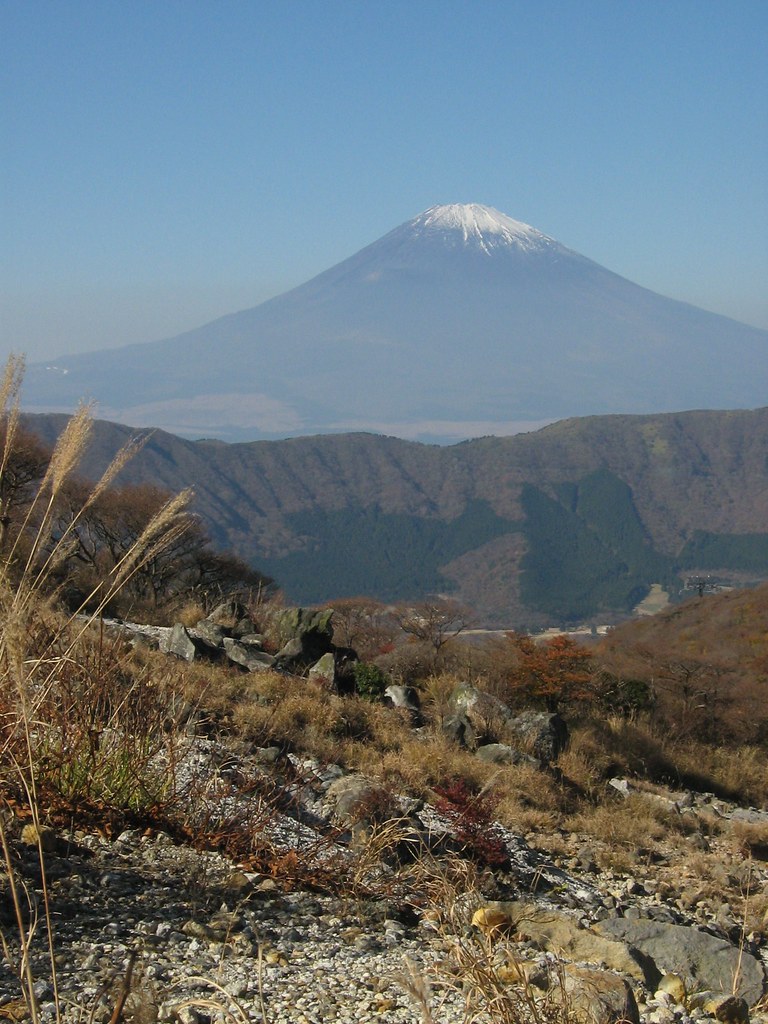
Up there, i had to change two more times, first for the Tozan Cable Car, then for the Hakone Ropeway. Just a fine variety of means of transportation i had there! When the Ropeway made it over the final ridge up to Owakudani, the reason why this spot attracted hordes of visitors became evident as the Fuji was raising in front of a bright autumn sky! What an impressive view!
But Owakudani is an attraction by itself, as the mountain crest is covered with sulphuric hotsprings and steam fuming out of the rugged ground. Unfortunately the nature-trail leading right through the moonlike landscape was closed down by the time, so i had to content myself watching it from some distance. Furthermore Owakudani also has its culinary speciality, that is black eggs, which are boiled in pools of the said hotsprings, giving them a dark colour thanks to a chemical reaction.
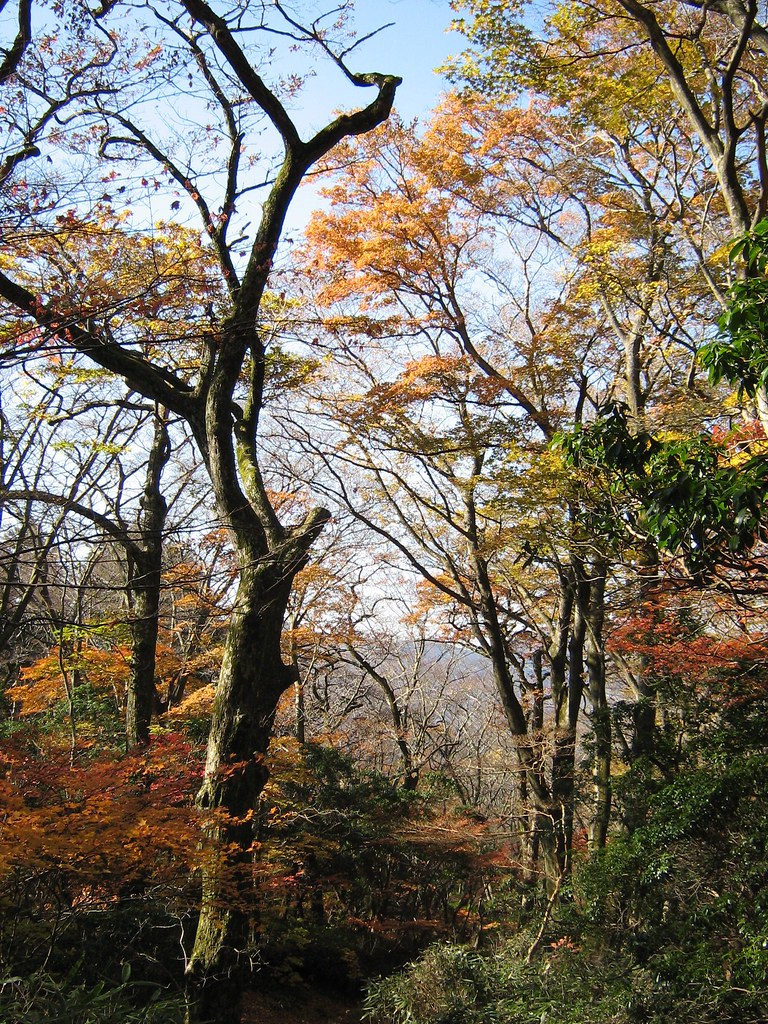
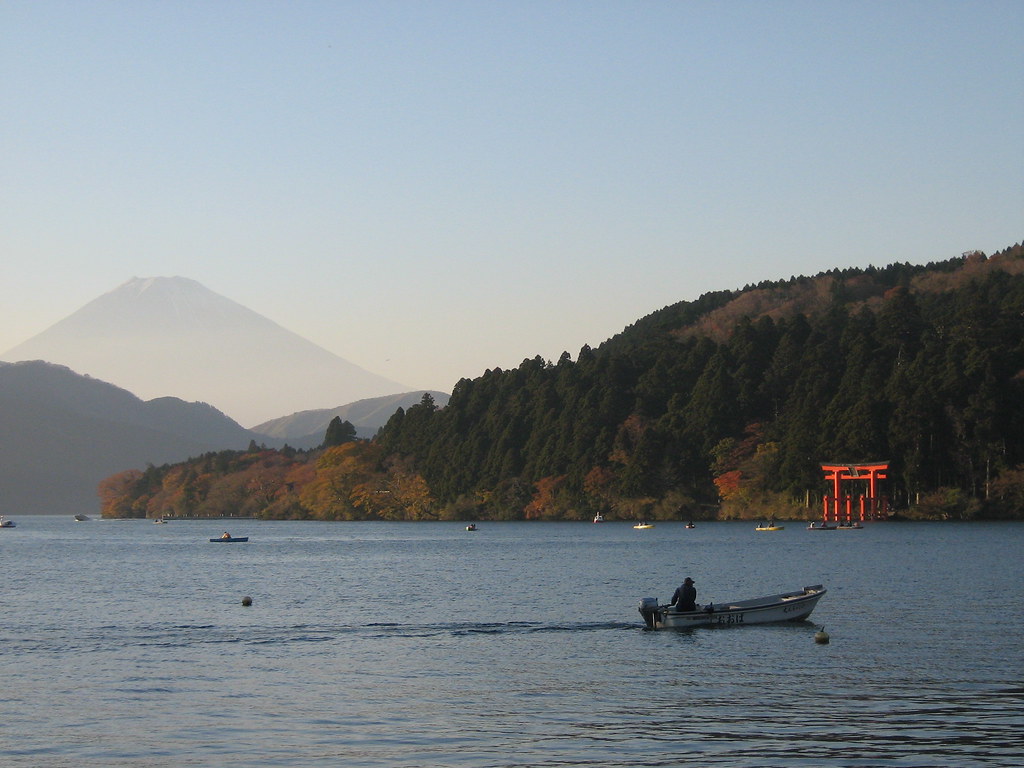
By then i definitely had to escape from the crowds and make my way down to lake Ashi along a hiking trail, leading through a forest in full autumnal decoration. It is momijigari season, the time Japanese are hunting for turned red leaves and its considered to be just the autumn equivalent of cherry blossom, well covered in weather reports. And in fact, besides the famous radiant red you have all kinds of different colours. After stopping at a temple and a tea house, both well hidden in the forest i got to the lakeshore of Togendai from where i took the megakitschy pirateboat ferry down to Hakone-machi, which is once again offering great views of the Fuji. Down there is the reconstruction of Edo-period Hakone Checkpoint, one of many posts serving to collect taxes on goods arriving form outside Edo as well keeping the few female inhabitants of the city inside (and therefore the daimyos loyal?).From there I walked over to Moto Hakone with its famous Shrine.
That's where I decided, to stay overnight as i definitely wanted to hike a little bit more and soak in an onsen without being worried about getting the last connection back home. So I stayed at Moto Hakone Guesthouse (Just a walk form the lakeshore up to Ashinokomae bus station, (0460-3-7880), where i got a small but cosy room for the night. After having spent the evening at the great Mori no Yu, I got up early the next day and made my way back to Yumoto along the Stone Paved Edo Time Highway, going down from the vulcanic heights along a scenic valley. Back at Yumoto i dipped once more into an onsen pool at the rustic Kappa Tengoku, before finally returning to Tokyo.
In the meantime I moved to central Tokyo. From the tiny suburb mansions to modern several storeys high buildings (I live at the 5th floor now, getting a great view of Shinjuku...). Going to school by bicycle rather then by train, it takes laughable 15 minutes now to get there. Furthermore, there is no more temple gong in the morning, but much sharper church bells, and in the evening no more factory-pipes fluting from the distance but drive-by-promotional-enchantments (“Gyooooza yasuiiii....!”). And between the traditional restaurants, sake bars and workshops nestled along the main street, there is some american style coffee shop or a french bakery to find here and there.
Nonetheless Akebonobashi is a mainly residential area, my room is oriented away from the main street and its quite calm, not what i expected from living in Tokyo at least (Traffic here is just not what you are used to in big cities in the west).But it is not only the outside that has changed. I share the apartment with three people, who are all nice, and we are doing much things together, talking, cooking, going out. But no more of the hospitality of my former hosts, who I liked a lot, and who I really miss. Being on my own now meaning also preparing my own food, shopping (trying to find all the good things i simply ate and drank so far), doing my laundry and putting out the garbage (one of the few things i really think is unnecessarily complicated here). And all these things work just a little bit different, but that's the fun finding out how...!
1)Man dozing off while unfolding a peace of paper. 2)Woman sleeping while on an escalator. 3)Girl satnding sleeps while holding herself up on a grab handle. 4)Girl fallen asleep while typing a message. To be continued...
Those who are not reading or utilizing their mobile-whatsoever in the wagon are asleep. And that is about 50% of the passengers. At first i found that really funny, how people managed to sleep in the most inconvenient positions you can imagine. And I wondered how so many people could burden themselves with de facto no-quality rest.But after some days of commuting I now understand why. Going for 1 ½ hour by train just drains your brain. After about 60 minutes I just don't want to read any more. Nothing at all! And despite just not being able to, i realize getting near the point just dozing off too. And most of the time I arrive at school feeling like have been hit on the head by a stone.

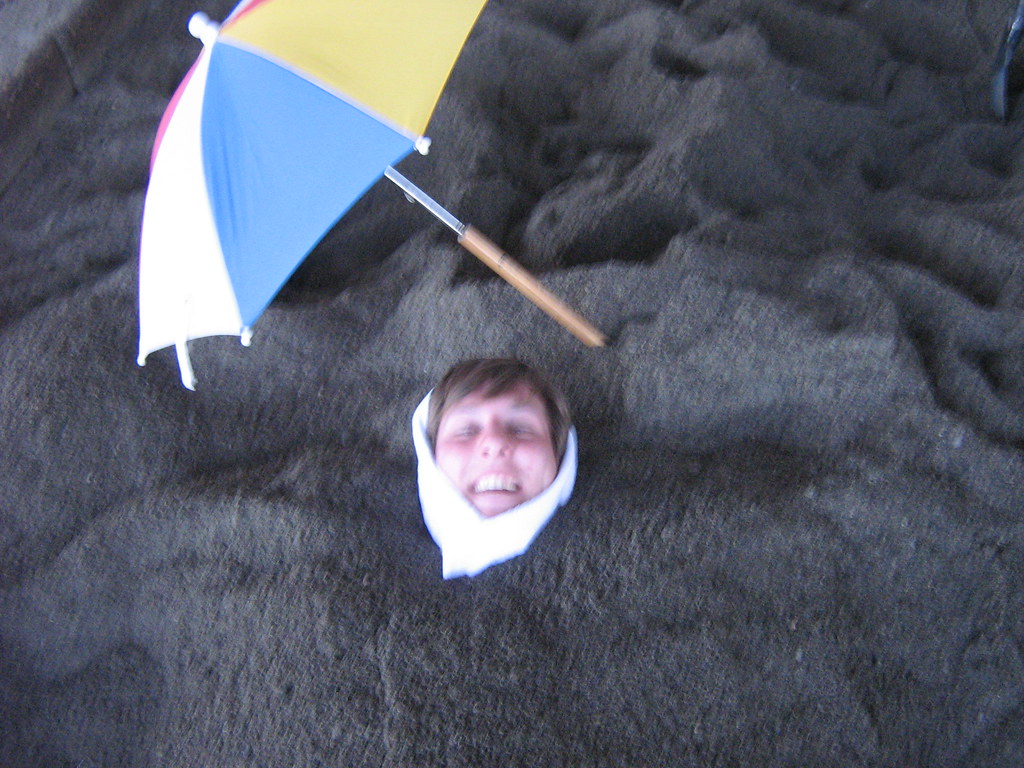 Where there are volcanos, hotsprings never are far, as i waited for the rocket launch day, i went south to Ibusuki, famous for its sandbath on the beach, you lie into the warm sand and are buried up to the neck, it can get really hot, but its just so relaxing. Only the constant sound of digging shovels is somewhat scary, reminded me of a burial ground. Anyway the salty thermal water is everywhere, steam from the beach, steam from the canals along the road and even the bath at the youthostel i stayed at, had it's own onsen.
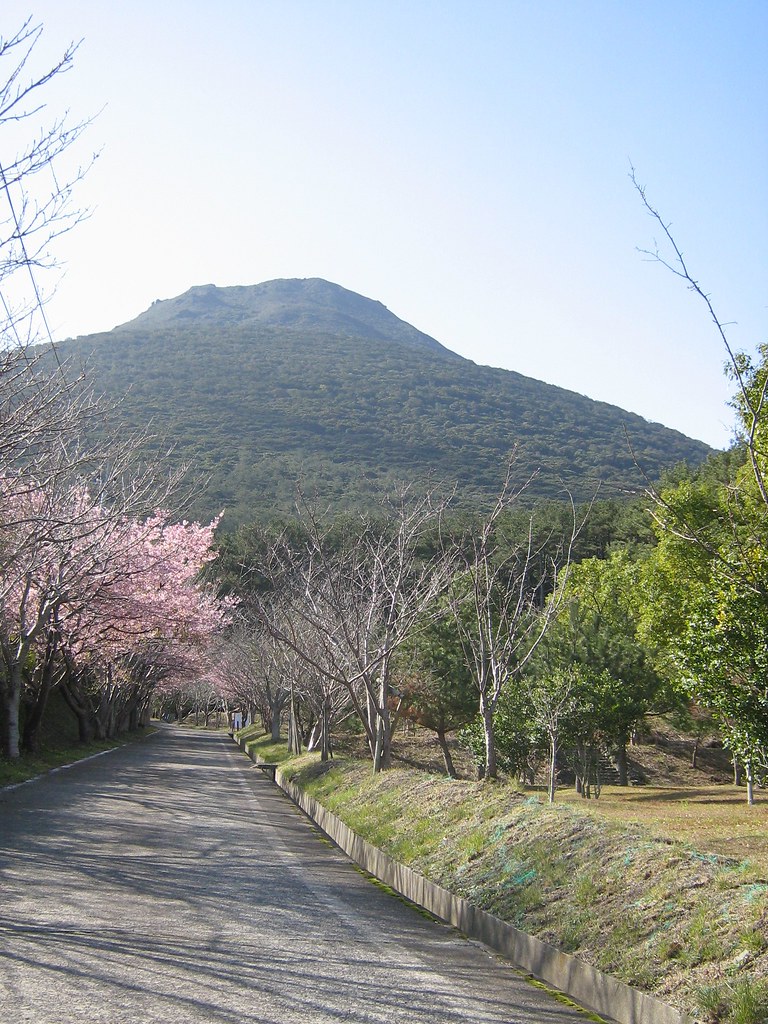 As bathing is best after a long hard day, not that i needed a pretext, i went further south to the symetric cone of extinct Kaimon-dake. It takes 2 hours along a narrow path winding up around the mountain. The last kilometer contained some climbing and ladders, but i really enjoed the first serious hike, since my passage over Gas-San last september. On the top, 900 meter above the close seas level, i had a stunning 360° view, wow!
 As today was the assigned day for a rocket launch, i hopped on the jetfoil (a calm ride, despite the rough sea) down to Tanegashima, where rifles were introduced to japan, to watch the launch. Unfortunately it was cancelled, so i had to content myself with a visit of the spacecenter, together with the launch facilities situated in front of a great beach scenery.