skip to main |
skip to sidebar
I arrived at Yamagata-city totally exhausted. Despite the assistance from the tourist office I didn't manage to find the hotel recommend in my wise book, so i stumbled into the next not to stylish looking business hotel just outside Yamagata station to the left, which called itself plainly “bizinesu hoteru”.
Having slept quite well i took an early bus up to Sao Onsen, a renowned ski and hiking resort, where i would allow myself 2 days of relaxation. I stayed at “Minshuku Boku no uchi” (Tel. 023-694-9542, literally meaning “my home”, which turned out to be a great name to earn surprised reactions, when being asked where i stayed.)
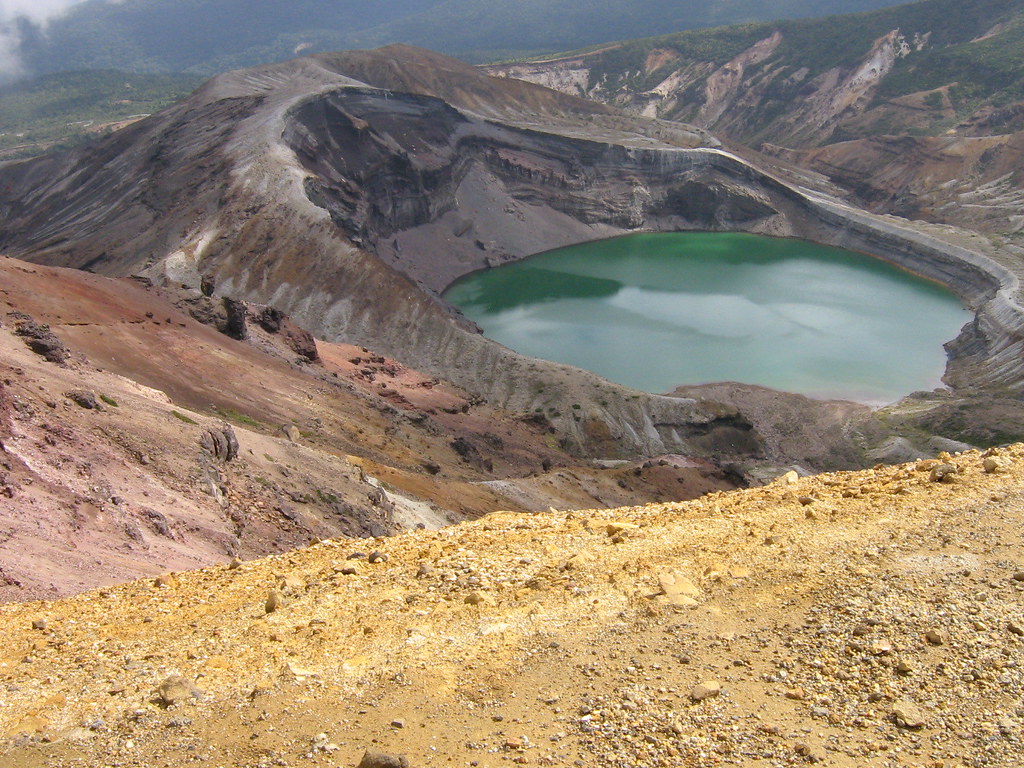
Zao Onsen offers two main attractions for visitors during this season:  The first one is Okama, a crater lake in midst of a reddish moonlike mountain scape. As I definitely have had enough of exhausting hikes i eased my way up there by taking the ropeway, so i only had more or less to follow the the chine to access a spectacular view. Just like at home, people here use to greet each other on mountains, and as during these days mountains were about as crowded as Tokyo subway is at rush hour, i soon felt like a supermarket cashier.
Put the view payed it all back! In fact the crater housing Okama lake, is only one of several craters. The sichle-shaped chine you walk around, while looking down to Okama, seams to be itself formed by volcanic activity.
Apropos energy from beneath the earth, Zao Onsen's other attraction is its hot springs (“Onsen” actually meaning hot spring, therefore Zao Onsen means nothing other than “Zao Spa”). The characteristic sulfuric smell welcomes you as soon as you get out of the bus up there, and you only stop to dislike it as soon as you slide into the hot water of a rotemburo (open air basin). Despite the long way up from the village-center (my legs still ached from the day before) i preferred the Dai-rotemburo, which might be the more basic one, but which offers the most natural beauty.
So there i really found much needed relaxation before returning to the hectic metropolis of Tokyo.
I didn't get too much sleep that night as the said wind, howling over the roof. As i opened the shutter to peer into morning light i was quite disturbed seeing no more than a light grey flatness. The shukubo was covered by clouds piling up at Gas-San and it rained from time to time. I was quite undecided what to do. There was no more bus for Tsuruoka and the weather really looked bad, despite the forecast reporting about good weather today.
 So i waited for nearly three hours, but nothing changed, it even got worse. I could have called a Taxi, but that would have cost me around 100€ and i would go the opposite direction i wanted to go. So finally I decided for going over the mountain top. As the people at the shukubo didn't try to hold me back, i thought to myself, it will be ok. But it got hard.
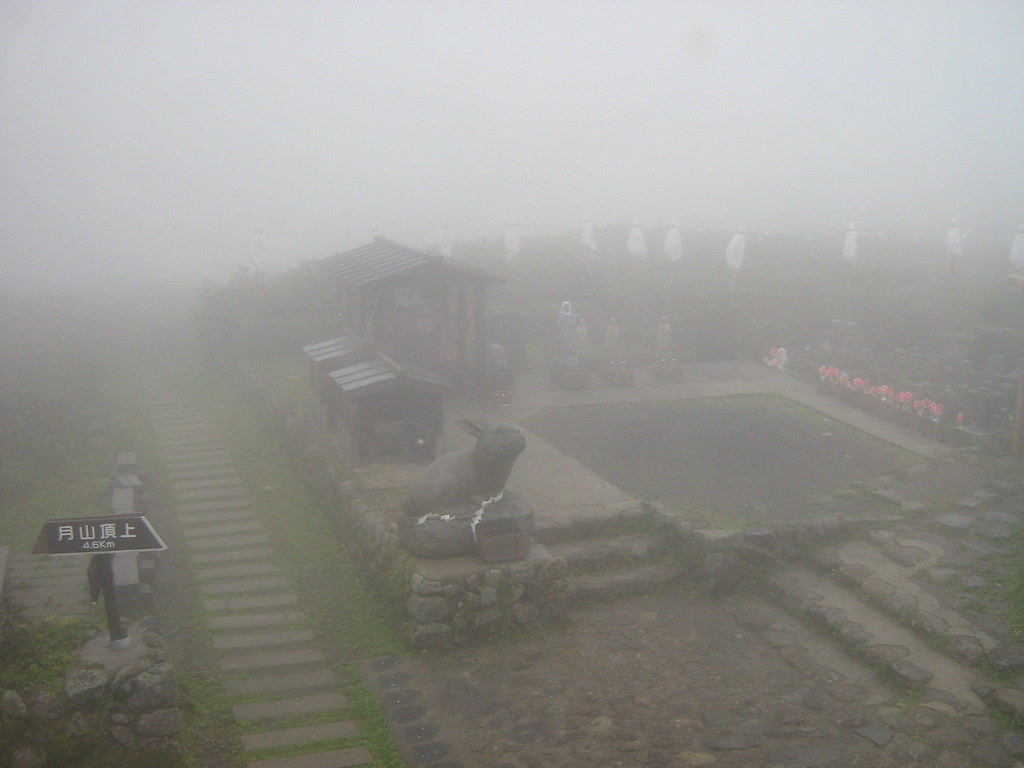
I lacked the appropriate equipment, especially boots and trousers, which would have been no great trouble, if weather had been better. But it started to rain again just 10 minutes after i had put on my backpack weighing around 10kgs and settled off. My jeans soon got soaked and the nice wooden planks, changed to a stone path even worse than the steps the day before. Sight was about 5-10 meters at the best.The higher up I came, the stronger the wind got, and it went cold. Balancing on the stones which were itchy and wet, i more than once nearly got knocked down by sudden blasts. The only thing preventing me from turning back were some other guys who went up too. Their equipment was much better than mine, only none of them seemed to care for their heads, as they didn't use theirg hoods, or anything, one of them wore a baseball-cap.
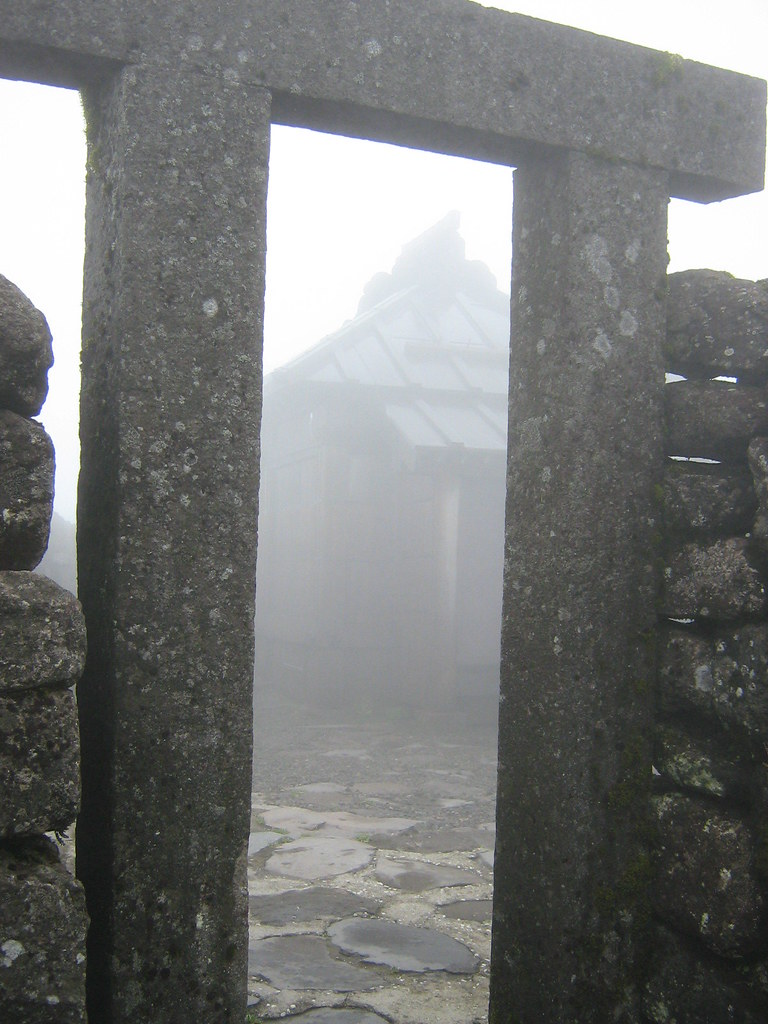
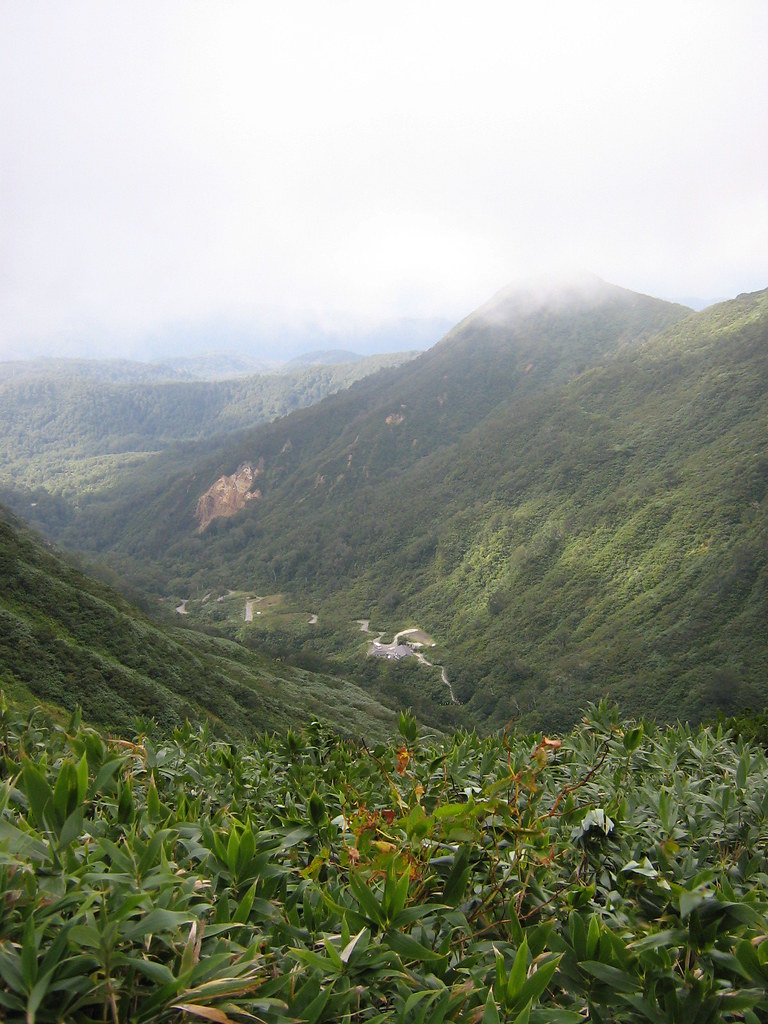
 After two hours walking at a military pace (official walking time: 3hours for 5km and 600m height difference) i reached the mountain top, on which there is Gas-san jinja (Gas-san shrine). This one was closed as had been all the other huts on my way up (strange thing buildings suddenly taking shape out of grey nothing). At least i found shelter behind the walls surrounding the shrine. I was exhausted and hungry, but i had nothing to eat, so i went on down the other side, towards Yudono-San, the third mountain, which you luckily simply pass by descending. At noon rain finally stopped and after about one hour later i got beneath the clouds, offering less winds and higher temperature. On the way to Yudono-san Jinja (shrine) a small river went along the path, but as i already got used to balancing over slippery rocks this was no major obstacle for me. But i realised i steadily got weaker, and lost security of my step. Finally i went down some ladders (slippery too) after which i got to Yudono jinja and finally got some rest.
 Yudono jinja is not a building like the other shrines but an about 3 meter high orange rock, from which a hotspring is pouring down. To worship it, you first receive a blessing by the priest, rub yourself with sacred paper, then you may walk it up along the warm well. Leaving, there is put up a small basin where you can soak your feet in the hot spring's water, which i did just gladly, before descending farther to Yudono-san hotel, which i thought to stay at, without having seen it. But as they charged 8500 Yen for a night in this run down concrete block dating probably from the 60ies, i decided to go to Yamagata-town directly, despite being totally exhausted.
The next day i got up early and went to the Tsuruoka tourist office, where i got all the information I needed. The nice clerk even made the reservation for me at Hachigome Shukubo (Temple Lodge at "Eight Station" on the way up to Gas-san (Information, tel. 090-3022-1191)). So this was my plan: I would go from Tsuruoka to Haguro-Town by bus then hike up Haguro. As business would close down on the same day around Gas-san, i were lucky to take the last bus to Hachigome, where i could stay for the night and the next day proceed up to Gas-san and farther on to Yudono-san, from there continuing to Yamagata-city. So i would have to carry all my lugage with me.
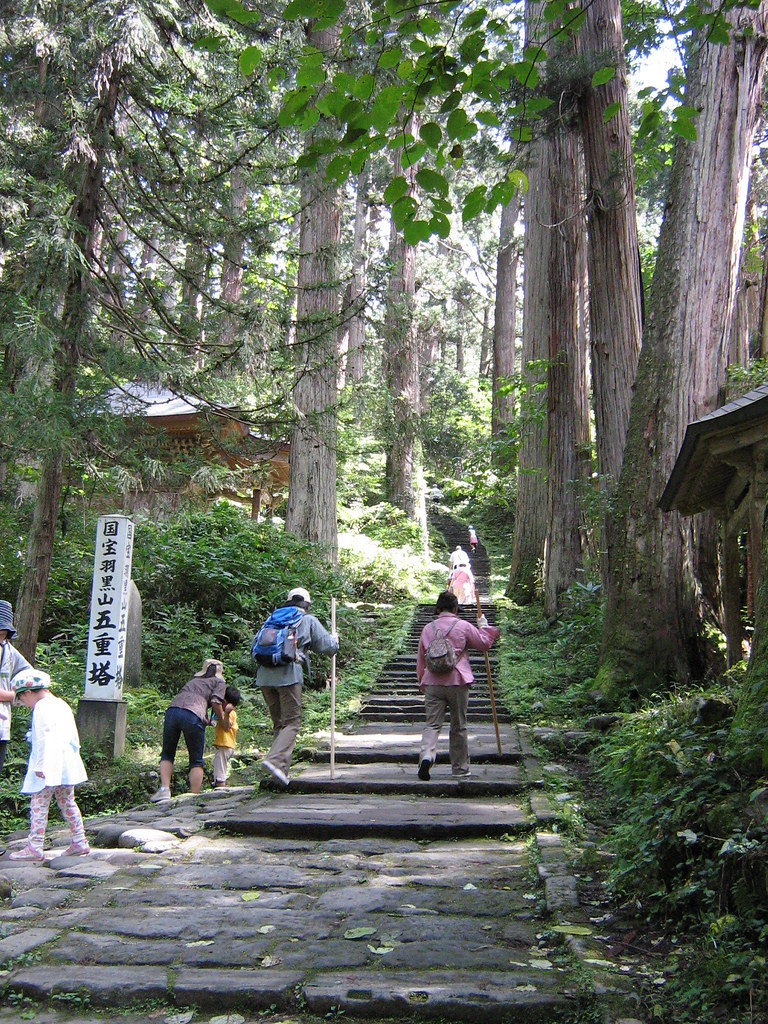
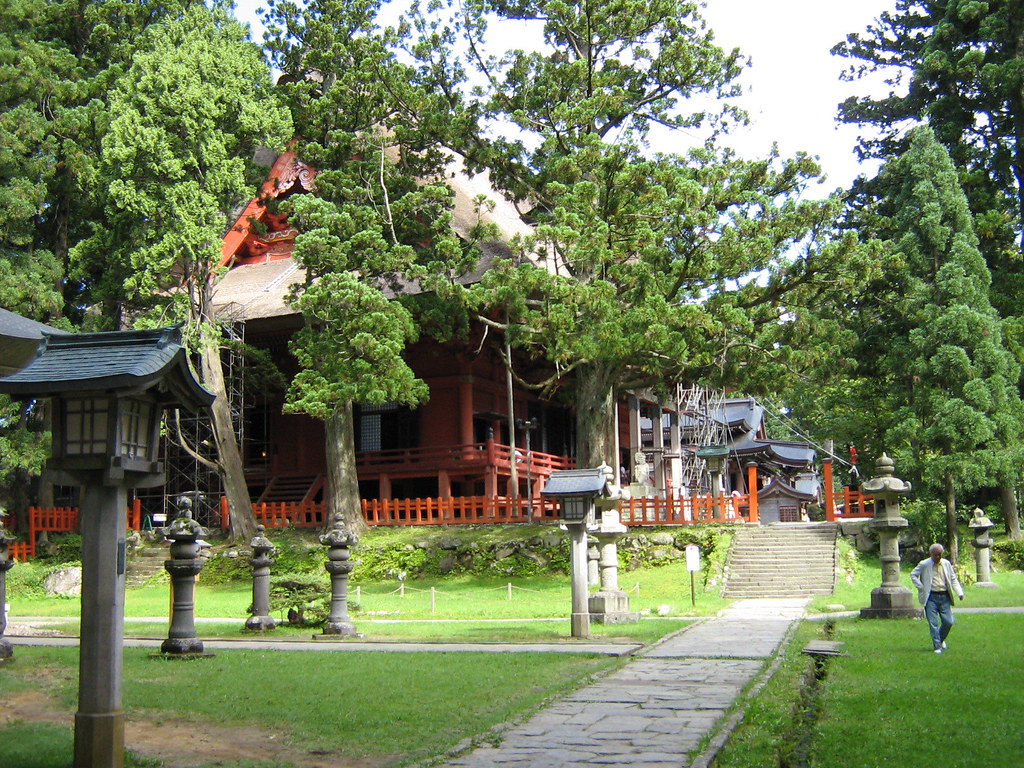
 After a short ride I got to Haguro-town, where you just turn left, to get on the path up to the peak. Haguro-San is the lowest of three sacred mountains. Pilgrimage there was established by Prince Hashiko in 594 AD, who practiced ascetism there. The three peaks have ever since been related with the idea of unity between shintoism and buddhism (shinto-deities are understood as incarnations of buddha), which was in fact the offical doctrine during Edo-Period. So just after the start of the path, i perished in a dense forest of tall cedar trees. The trail itself consist mainly of some 2000 stonesteps. Unfortunately these steps are not made for contemporary europeans feet, so i had to decide either going up there on my toes, or otherwise do it telemach-style. I decided for the latter.
On the way up, you pass by many shrines and also a 1000 year old Pagoda (that you normaly only find next to buddhist temples), as well as a 1400 year old cedar. After about 2/3ds of the way up there is a traditional teahouse where i stopped to have some matcha (powderised green tea) and enjoyed the plains stretching out at the feet of Haguro-San. You also get your certificate of achievement there, proving that you did all the way up on your own.
 After the teahouse it's only a short hike, then the path ends just next to Sanjin-Gossiden, a tall red shrine, housing all three gods of the mountains. It is the main building in a vast complex of shrines, lodges, a museum, including some souvenir-shops that also serve soba (noodle soup).
I got the before mentioned bus that went up to Gas-san eight Station this season, meaning also that i definitely had to go on to Yamagata, as there was no returning to Tsuruoka by public transport within this year. The bus winded up its way up to Hachigome, where i went directly to the shukubo, which was a basic mountain hut just next to a shrine. I seemed - once again - to be the last guest this season as i shared the large loft just under the roof with no one (which was a creepy experience, when cold autumn wind howls outside). As there was some time left of the day, i was strolling a little bit around, impressed by the view, following wooden pathways, to whichs sides laid marsh-ponds, and i was just glad having weather on my side.
See all Fotos here!
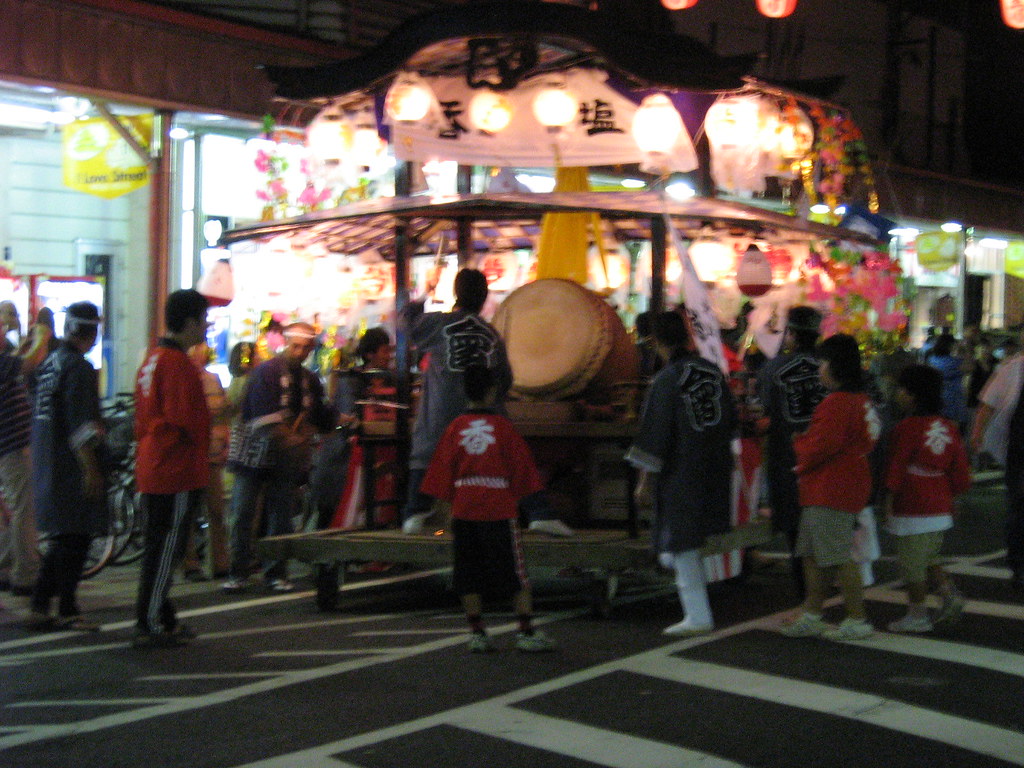
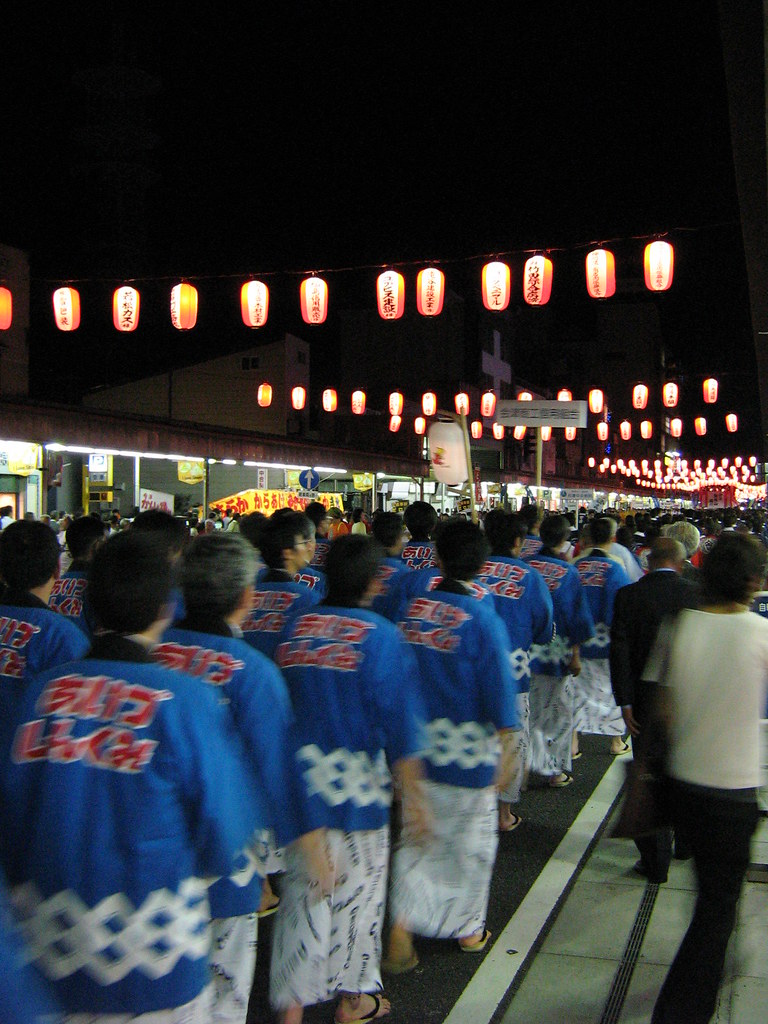
 This is the festival to celebrate the beginning of autumn as well as rice harvest season. During three days there were celebrations all day long of witch i visited the evenening lantern parade and the Bandai dancers as well as the samurai procession the next morning.
In the evening events took place in the towncenter where the main road was blocked for circulation. I came early so to see how things would develop.
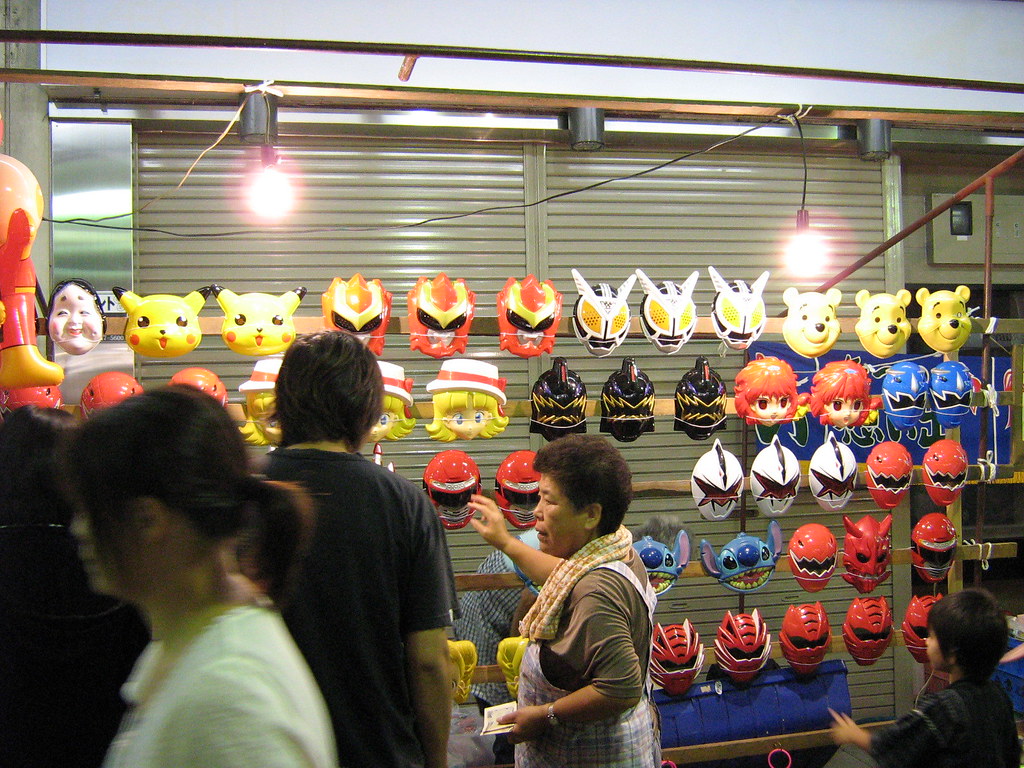
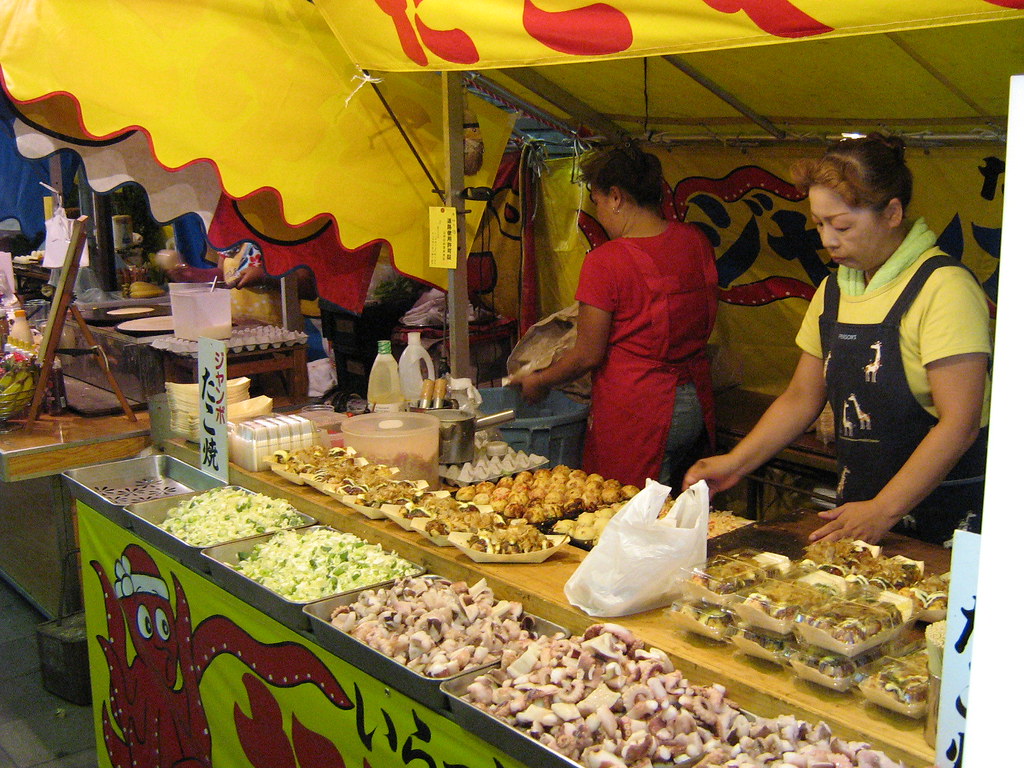
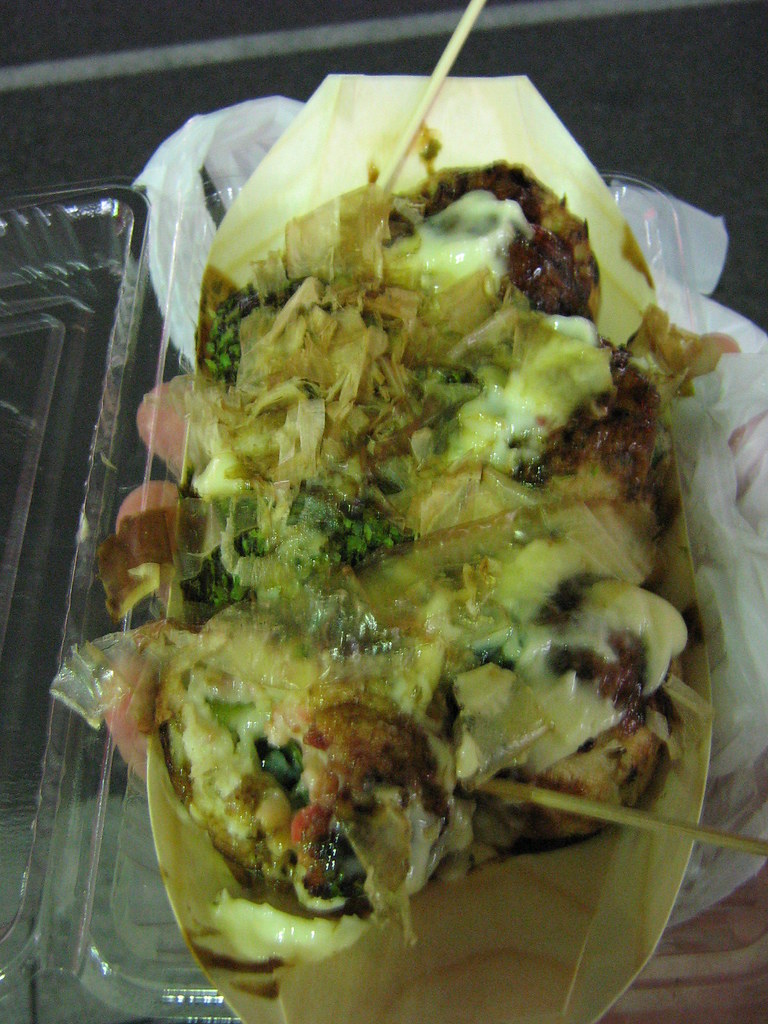
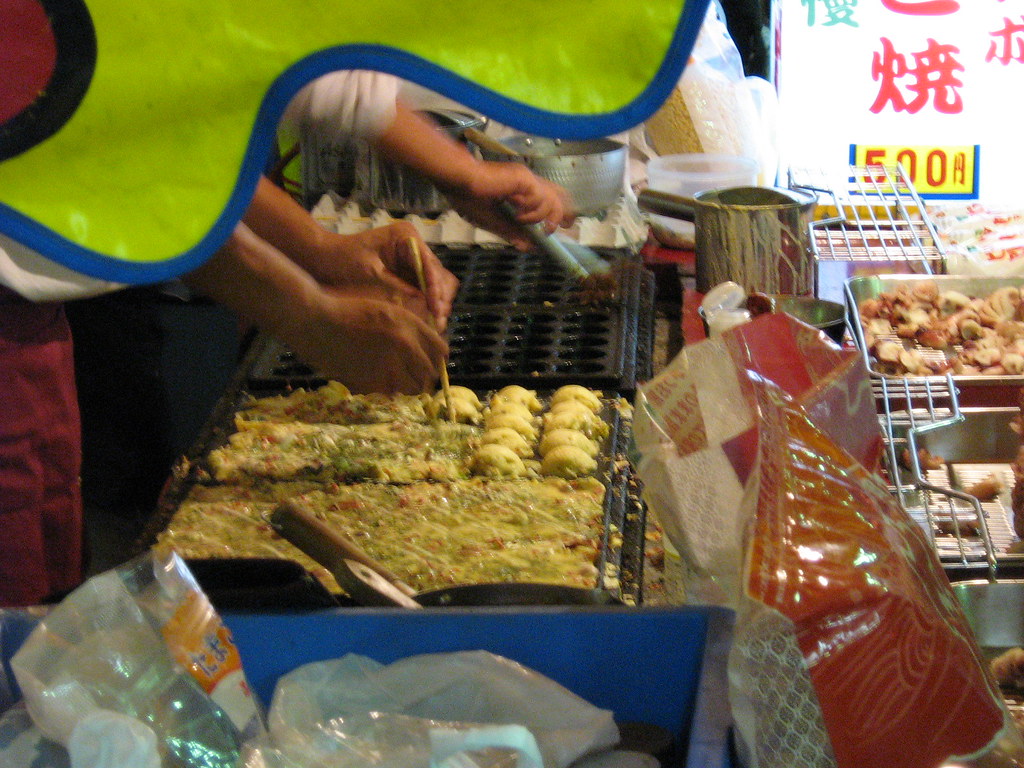
First of all, no alcohol anywhere! Instead the sidewalk was rowed with stands offering, diverse specialties, like Tako-Yaki, which is some sort of Knoedel made out of octopus. Look here how its made!
 So first came the pupils, who were each carrying a lanteren, then the street was open to the bandai dancers. The most impressing thing wasnt the opulence of costumes, but the sheer mass of performers! I didnt manage to count the children, but I estimated the dancers to be a 1000 at the very least (locals told me it was much more!) So there where nearly as many people involved in the dance, than where standing by watching. Perfomers not only came from diverese clubs engaged in some cultural activity but also from local companies, who seemed to have kindly invited their employees to join the celebration.What they did, was dancing around a main stand at the central crossing of the road, filling it up from one end to the other (about 1km). They where accompanied by the repeated enchantement of a female voice (which i first thought to be playback), who continued to chant for at least three hours long without pause. A really dionysic feast that was and you could feel a rise of temper just without any alcohol, people on the sidewalk gradually joining the dance as the evening advanced.
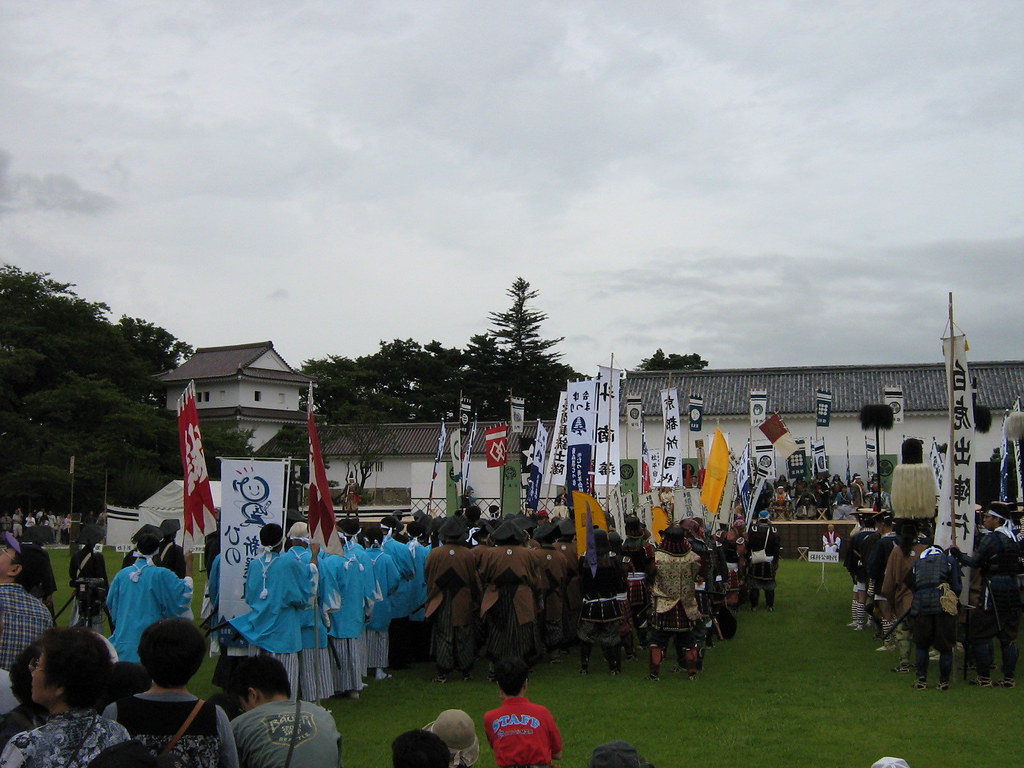
 The next morning, there was a troop gathering at Tsuruga-Choo. Again there where several hundred people involved, wearing different samurai-costumes. They were welcomed by a assembly of the daimyo and other high rank warriors. During the day, they would make their way from the castle, again through the city center. I only watched the gathering, as I had to catch the train to Niigata, to go on to the three sacred mountains of Dewa Sanzan.
You can find the complete album of the Festival here!
So as troubles with getting internet access continue, I report a little bit delayed.
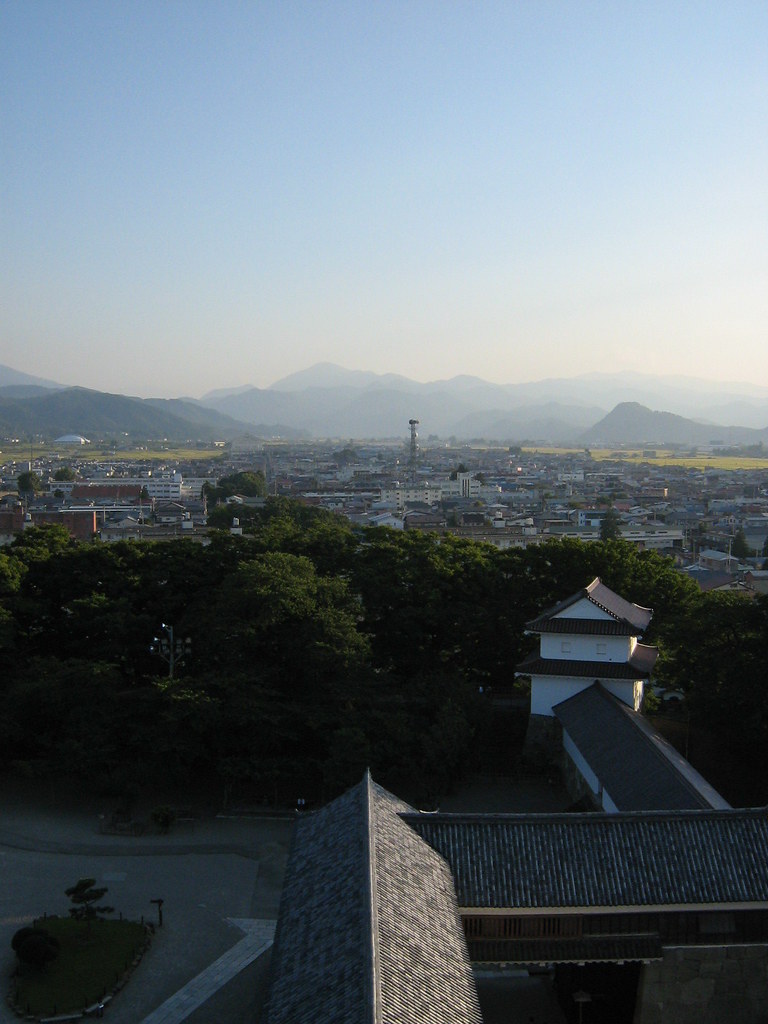
 I went from Tokio to Koriyama with the Tohoku-Shinkansen Line and then by the local train passing many rice field as well as Bandai-San on to Aizu Wakamatsu. This one turned out to be a rather unimpressing middle sized town. I stayed at Hotel Alpha-1, one of these frequent buisness hotel-blocks you can see near every train-station in Japan (Tel. 0242-326868). In fact it was a convenient place, staff was very nice, and as i got a room in the 10th floor I could overlook the whole town, Tsuruga-Choo, as well as the mountains surrounding the town.
From the hotel the street leading to the town center is Dr. Noguchi-Street, which I started to like only after having it walked up and down at least twice. Because during the day local buisinessman came to the strange idea filling this narrow road inhabiting shops and soup-kitchens with music might raise the attracivity of this street (at least it was some turned down classical music!). Thing which reminded me a lot of Sugar Creek in Ohio, but in fact this turned out to be very common in Japan.
But Aizu has more to offer, in fact it has some very nice sights. So the next day i borrowed a bicycle from the hotel (which was free) and experienced the bike-friendliness of japanese circulation. It was perfect to reach the monuments.
Aizu-Wakamatsu has some historical background, which still lives on in the spirit of todays people (at least locals like to tell you that).
So when 1868 Emporer Meiji reclaimed power this lead to Boshin Civil war, in which he had to fight against ruling Tokugawa-Shogunate. And Matsudaira Katamori, head of the Aizu clan stayed loyal to shogun Tokugawa, opposing the emporer. In fact the Aizu where the very last to fight on against Meiji rule.
When Tsuruga-Choo was attacked by imperial forces and burnt down, a group of young samurai known as the Shiroi-Byakkutai (White Tigers) commited collective suicide, thinking their cause was finally lost. In fact the war continued on for about a month... (oops!). Anyway this tragic story is very popular in Japan. When I arrived on top of the mouintain a young woman reenacted the story. Also on the mountain, the graveyard of the dead samurai, as well as Sazae-Doo.
Not far from Imoriyama is the rebuilt residence of Aizu Bukeyashiki, displaying the composition of the daimyos estate. A little farther up the hill is another graveyard, where the members of the Aizu-Clan are buried. In fact all of the hill seems to consist of graves making a rather spooky hike.On my way back I stopped at Oyaku-En, a meditational garden at the townborder of Aizu to relax a bit.

 The first one is Okama, a crater lake in midst of a reddish moonlike mountain scape. As I definitely have had enough of exhausting hikes i eased my way up there by taking the ropeway, so i only had more or less to follow the the chine to access a spectacular view. Just like at home, people here use to greet each other on mountains, and as during these days mountains were about as crowded as Tokyo subway is at rush hour, i soon felt like a supermarket cashier.