skip to main |
skip to sidebar
During the weekend I went to Chiba City, to see what it's like.  Being not that tourist-mekka, Chiba has its sights, such as Chiba-Castle, a zoo and the Port Tower, all of these linked by Chiba Urban Monorail, worlds longest suspension type monorail. Most of the day i spent at the port area, which is one of the largest in all of Japan. Just some minutes walk from Minato Station there's a small piece of green in midst the never to end industrial architecture spreading along the eastern coastline!
Just at the waterfront of this recreational area, there is the port-tower, a slender building of 112m height.  Still not totally gotten used to outdoor background music, i stood in its shadow amazed and listened to jazzo-electrified popsongs (something that met my liking at last). I went it up of course, trying not to mind looking down 112 meters through a translucent glass- and steel construction. But you also have a great view over all the vast commercial area, up to Tokyo where buildings slowly disappear in the fume. Ships coming in and going out again, waking some wanderlust in me just at the other end of this beautiful earth.
 Outside people were taking advantage of the accessible waterfront. At a small renaturalised bay surrounded by a factory- and silo-landscape, people were relaxing, surfing, fishing crabs (leaving aside the flying fish, which are lots of fun to watch) and looking for seashells (me too!). Still not having had enough of industrial coastline, i went on a boat, that did the port tour, allowing me to experience the view from the seaside.
 I went back again by the monorail, stopping at Chiba Park to relax a bit, before continuing to the city center to experience Chiba after nightfall. In fact, by then the scenery totally changed. And daytime-commuters giving way to a more younger townsfolk looking for entertainment. Finally I let myself convince once more by some crazy background outdoor free jazz, to look for the place where they had that. But in vain. All in all I had quite a hard time getting a simple drink! That's because on ground floor, there are mostly shops. Clubs and bars, are on higher floors, so no strolling by, checking if the place is what you're up to right now. Instead there are panels in front of the elevators, turning out to be totally undecipherable for me, including signs saying pub, while the place turning out to offer some slightly different kind of leisure. I got my beer at last. In a restaurant.
Link to the Foto-Map (Thanks go to Thomas here!)
1)Man dozing off while unfolding a peace of paper.
2)Woman sleeping while on an escalator.
3)Girl satnding sleeps while holding herself up on a grab handle.
4)Girl fallen asleep while typing a message.
To be continued...
 Those who are not reading or utilizing their mobile-whatsoever in the wagon are asleep. And that is about 50% of the passengers.
At first i found that really funny, how people managed to sleep in the most inconvenient positions you can imagine.
And I wondered how so many people could burden themselves with de facto no-quality rest. But after some days of commuting I now understand why.
Going for 1 ½ hour by train just drains your brain.
After about 60 minutes I just don't want to read any more.
Nothing at all!
And despite just not being able to, i realize getting near the point just dozing off too. And most of the time I arrive at school feeling like have been hit on the head by a stone.
 The distinctive coastline is shaped by land reclamation programs started in the sixties.
Literally not a just title I am borrowing here. As Chiba City is rather far away and it takes about 20 minutes to get there.
 The town I am living at is Hamano, still part of the never seeming to end agglomeration of Greater Tokyo Area, inhabiting around 35 million people (it's 20 more minutes by car farther south that urban area finally ends).
Despite its name (Hamano meaning “seaside fields”) you never see Tokyo Bay from anywhere here, as heavy industry, which Chiba prefecture is known for, is spreading down along the seaside and entering is prohibited (i tried to).
But just like of the nearby coastline, you never notice anything of all these kind of plants, power-, petrochemical-, what so ever, at the house where I stay.
It is situated in midst of a nice residential area, a shrine or workshop here and there, some traditional restaurants, as well as your “conbini”(-ent store) just around the corner. The hosts are incredibly friendly people and I like them really much. Of course there are these rules you have to stick to, but as we (there are more guests) are staying in a separate building, there is at about enough privacy and yes! there's space too!
The traditional room I live in might have 15-20m², opening up to a small garden with tiny crooked trees, full with strange fruits that are only not edible (probably for the best).
You might think you are living in a small town just like anywhere in Japan.
And a swift  ride by train is probably the best cure from such delusions!
It takes about 90 minutes to get to school, but only if you get the rapid train, which in fact is quite popular among commuters, meaning you won't sit down for most of the ride. (It's crowded just all the time. From 11:00 to 16:00 it might be, let's say, less crowded.)
Of course there are the local trains too.
So enjoy reading a book during 1h45. Or find out why all the mobile gadgetry packed with the latest killer application, just no one cares for back home, is such a big thing over here!
Only that a plain tourist visa exempts you from the merits of postpaid-service. So no mobile plugging into the net for you, cowboy! (In fact I know quite a few people who didn't manage to get a mobile phone at all).
Another funny thing about commuting 90 minutes in one direction, is that the worlds best working public transport system situated in the worlds largest metropolitan area simply stops at about midnight. So when you go out make sure to head home at 22:30 at the latest, or otherwise be prepared to stay up all night. Much time to spend at home therefore!
Despite my hosts having put up a WLAN router, i hoped if not mobile so i could simply connect to the internet, without having to walk over to the noisy entertainment-center. But the thing just didn't work. Flatline! Eventually I spent two further weeks without permanent internet-connection, experiencing just how dependent on it one is today. Dependent, as it actually fullfils a purpose. But I tell you, this was cold turkey!
No skypeing with my girlfriend, no news, no getting organized on a more than basic level, checking train connections, anything...!
By now its fine. No more hanging around at strange manga-shops, or slipping onto the next seat released at school, to check emails and occasionally write one...
Junkie-time definitely is over!
I arrived at Yamagata-city totally exhausted. Despite the assistance from the tourist office I didn't manage to find the hotel recommend in my wise book, so i stumbled into the next not to stylish looking business hotel just outside Yamagata station to the left, which called itself plainly “bizinesu hoteru”.
Having slept quite well i took an early bus up to Sao Onsen, a renowned ski and hiking resort, where i would allow myself 2 days of relaxation. I stayed at “Minshuku Boku no uchi” (Tel. 023-694-9542, literally meaning “my home”, which turned out to be a great name to earn surprised reactions, when being asked where i stayed.)
Zao Onsen offers two main attractions for visitors during this season:  The first one is Okama, a crater lake in midst of a reddish moonlike mountain scape. As I definitely have had enough of exhausting hikes i eased my way up there by taking the ropeway, so i only had more or less to follow the the chine to access a spectacular view. Just like at home, people here use to greet each other on mountains, and as during these days mountains were about as crowded as Tokyo subway is at rush hour, i soon felt like a supermarket cashier.
Put the view payed it all back! In fact the crater housing Okama lake, is only one of several craters. The sichle-shaped chine you walk around, while looking down to Okama, seams to be itself formed by volcanic activity.
Apropos energy from beneath the earth, Zao Onsen's other attraction is its hot springs (“Onsen” actually meaning hot spring, therefore Zao Onsen means nothing other than “Zao Spa”). The characteristic sulfuric smell welcomes you as soon as you get out of the bus up there, and you only stop to dislike it as soon as you slide into the hot water of a rotemburo (open air basin). Despite the long way up from the village-center (my legs still ached from the day before) i preferred the Dai-rotemburo, which might be the more basic one, but which offers the most natural beauty.
So there i really found much needed relaxation before returning to the hectic metropolis of Tokyo.

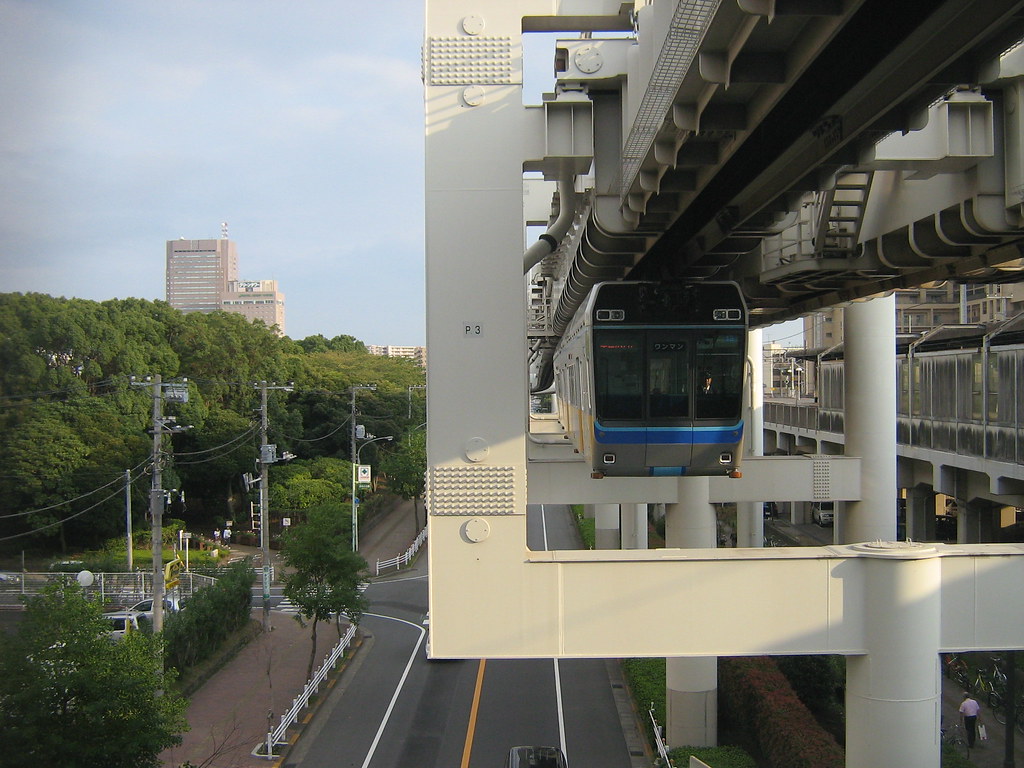 Being not that tourist-mekka, Chiba has its sights, such as Chiba-Castle, a zoo and the Port Tower, all of these linked by Chiba Urban Monorail, worlds longest suspension type monorail. Most of the day i spent at the port area, which is one of the largest in all of Japan. Just some minutes walk from Minato Station there's a small piece of green in midst the never to end industrial architecture spreading along the eastern coastline!
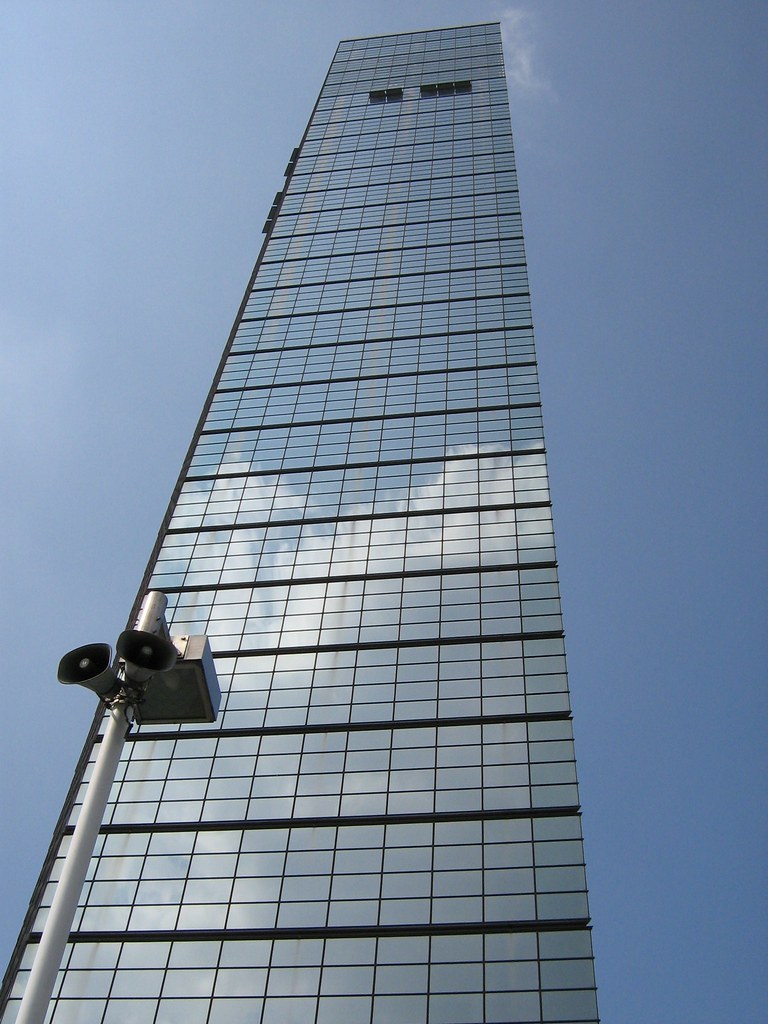 Still not totally gotten used to outdoor background music, i stood in its shadow amazed and listened to jazzo-electrified popsongs (something that met my liking at last). I went it up of course, trying not to mind looking down 112 meters through a translucent glass- and steel construction. But you also have a great view over all the vast commercial area, up to Tokyo where buildings slowly disappear in the fume. Ships coming in and going out again, waking some wanderlust in me just at the other end of this beautiful earth.
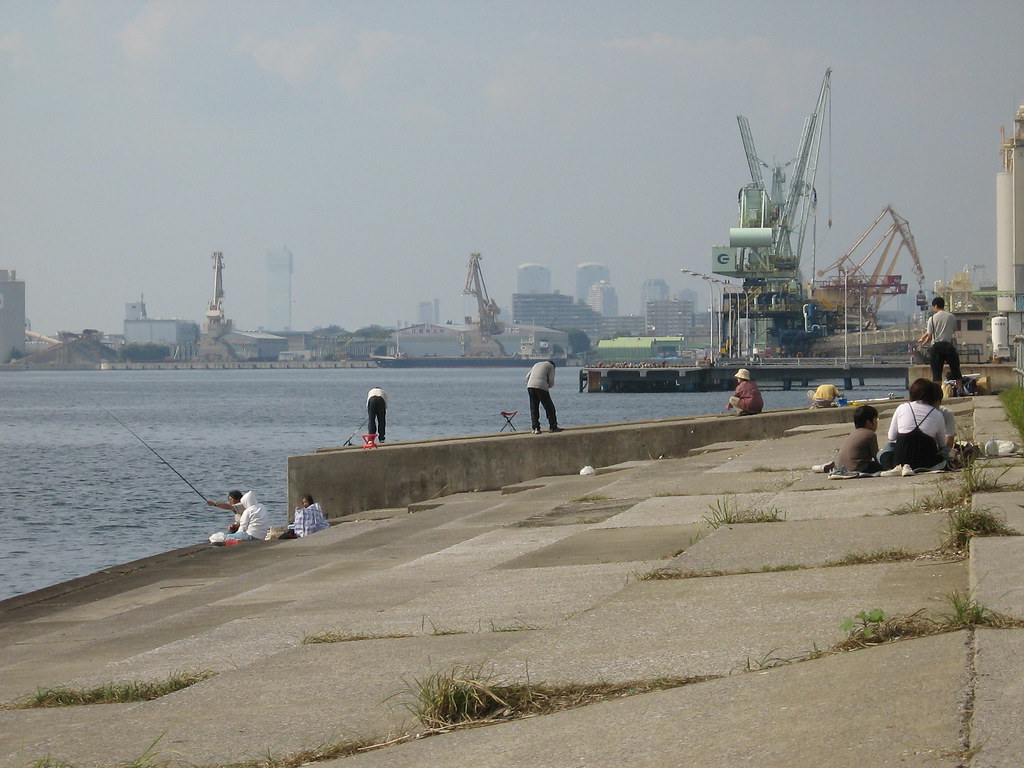 Outside people were taking advantage of the accessible waterfront. At a small renaturalised bay surrounded by a factory- and silo-landscape, people were relaxing, surfing, fishing crabs (leaving aside the flying fish, which are lots of fun to watch) and looking for seashells (me too!). Still not having had enough of industrial coastline, i went on a boat, that did the port tour, allowing me to experience the view from the seaside.
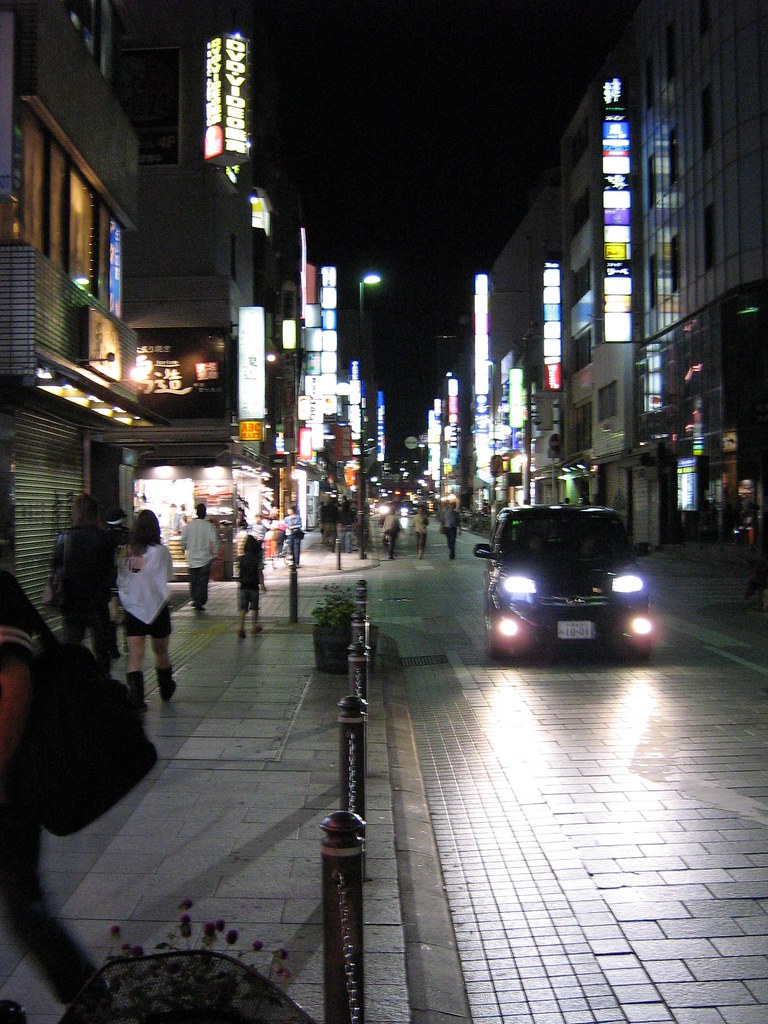 I went back again by the monorail, stopping at Chiba Park to relax a bit, before continuing to the city center to experience Chiba after nightfall. In fact, by then the scenery totally changed. And daytime-commuters giving way to a more younger townsfolk looking for entertainment. Finally I let myself convince once more by some crazy background outdoor free jazz, to look for the place where they had that. But in vain. All in all I had quite a hard time getting a simple drink! That's because on ground floor, there are mostly shops. Clubs and bars, are on higher floors, so no strolling by, checking if the place is what you're up to right now. Instead there are panels in front of the elevators, turning out to be totally undecipherable for me, including signs saying pub, while the place turning out to offer some slightly different kind of leisure. I got my beer at last. In a restaurant.